Bluffview & Kessler Park Heat Island HVAC: Ductless Cooling for Historic Wooded Neighborhoods
Bluffview and Kessler Park's historic architecture and tree canopy hide an urban heat island problem: wooded ravines trap humid air and aging systems fail. Ductless mini-splits preserve neighborhood character while handling humidity + heat efficiently. → Request a Free Evaluation or call 214-238-4349
The Bluffview and Kessler Park Urban Heat Island Profile
Bluffview and Kessler Park are among Dallas's most distinctive, architecturally significant neighborhoods. Tree-lined streets, mature oak and pecan groves, steeply sloped terrain along Dallas ravines, and distinctive period homes (Tudor revival, Colonial revival, 1920s–1950s craftsman) create an image of quiet, protected affluence.
Yet these neighborhoods face a nuanced urban heat island problem entirely different from dense asphalt-heavy areas like East Dallas or Pleasant Grove.
The Bluffview / Kessler Park heat profile:
- Summer peak ambient: 105–110°F (vs. 102°F at DFW Airport)
- Urban heat island effect: 6–8°F hotter than surrounding rural areas (moderate, not extreme)
- BUT: Wooded ravine terrain reduces airflow through neighborhoods, trapping humid air
- Attic temperatures over living spaces: 130–150°F (lower than asphalt-heavy areas, due to canopy)
- Typical AC runtime in peak season: 12–16 hours/day
- Summer electric bill: $160–$250/month (lower than densely built neighborhoods)
- Critical factor: Humidity control (60–70% RH) often matters more than raw cooling capacity
This is a humidity challenge masquerading as a cooling problem.
Why Bluffview and Kessler Park Create Unique HVAC Challenges
Wooded Ravine Terrain Reduces Airflow
Bluffview and Kessler Park neighborhoods are defined by steep terrain along Dallas ravines. The architectural beauty—homes nestled into hillsides, surrounded by mature native oaks and pecans—creates a critical HVAC problem:
- Reduced neighborhood airflow: Ravine topography blocks cooling breezes; air stagnates in the wooded terrain
- Thermal mass of the landscape: Soil and dense vegetation store moisture; nighttime cooling is poor
- Humidity concentration: Water from irrigated yards, tree transpiration, and stagnant air creates elevated ambient humidity (65–75% RH vs. 55–65% in open areas)
- Visible condition: Even on 105°F days, the air feels "thick" in Bluffview—that's humidity, not just heat
Historic Housing Stock with Compromised Ductwork
Bluffview and Kessler Park are characterized by:
- Tudor revival homes (1920s–1940s): High ceilings, complex room layouts, period details
- Colonial revival estates (1930s–1950s): Symmetrical exteriors, internal room divisions
- Craftsman and period ranch homes (1940s–1960s): Original ductwork now 50–80 years old
Critical problem: These homes were built without air conditioning, then retrofitted with HVAC in the 1960s–1980s. The ductwork:
- Runs through attics with challenging slope and vault configurations
- Often terminates in basements, crawl spaces, or mechanical rooms (poor distribution)
- Has seams and connections that have degraded over decades
- In high-humidity conditions, ductwork condensation and mold growth are common
Original ductwork in humid Bluffview summers becomes a humidity-trapping liability, not an asset.
Tree Canopy Benefits Are Misunderstood
Yes, Bluffview and Kessler Park have substantial tree canopy—40–60% shade coverage during peak summer. This moderates solar gain on roofs and walls, which is good.
But it masks a humidity problem:
- Tree transpiration (water vapor release from leaf surfaces) adds 5–10% to ambient humidity in the immediate neighborhood
- Dense canopy reduces solar ventilation of attics and crawl spaces (attics stay damp; mold risk increases)
- Shaded ground surfaces stay cooler during day but release moisture at night, keeping nighttime humidity high
Result: Homes in Bluffview don't suffer from peak solar gain like South Dallas, but they struggle with sustained humidity that never fully drops at night.
Aging Central Systems Fail Under Humidity Load
Most Bluffview and Kessler Park homes have 20–40-year-old central AC systems designed for cooling, not dehumidification. These systems:
- Run to satisfy temperature setpoint (74°F), then cycle off
- Don't independently dehumidify—they dehumidify as a side effect of cooling
- In high-humidity, moderate-temperature conditions (like Bluffview summer nights: 78°F, 70% RH), the thermostat is satisfied, AC cycles off, but humidity climbs to uncomfortable levels (>60% RH indoors)
- Fail to prevent mold growth in attics, crawl spaces, and ducted areas
Residents feel sticky, damp conditions despite the AC running.
What This Means for Your Bluffview/Kessler Park Cooling Comfort
The Humidity Problem Masquerading as a Cooling Problem
Bluffview homeowners often report:
- "My AC runs all day but I still feel hot and sticky at 3 p.m."
- "Bedrooms feel damp in the morning"
- "AC works fine, but humidity never drops below 60% indoors"
- "Basement and crawl space smell musty even with AC running"
These are humidity problems, not temperature problems. A traditional AC system cools to setpoint, then stops. It doesn't independently manage humidity. In Bluffview's high-ambient-humidity environment, temperature setpoint is reached but humidity is still 65–75%.
Central Ductwork Becomes a Humidity Trap
In high-humidity conditions, ducted systems suffer from:
- Condensation in cool ducts: Cold ductwork in humid attics sweats; water collects in horizontal runs
- Mold growth: Moisture + dust in attics = mold colonies in ductwork
- Musty smell throughout home: Air circulating through moldy ducts spreads odor
- Duct sealing failure: 50–80-year-old seams deteriorate; humid outside air infiltrates through leaks
The Ductless Mini-Split Solution for Bluffview and Kessler Park
Mitsubishi inverter-driven ductless mini-splits are specifically engineered to handle sustained humidity + moderate cooling demand—the exact Bluffview/Kessler Park profile.
How Ductless Solves the Humidity Problem
Central AC system:
- Cools to setpoint, cycles off
- Dehumidifies only incidentally while cooling
- When humidity is high but temp is moderate, system can't respond independently
Mitsubishi ductless mini-split:
- Compressor modulates continuously at part-load capacity (40–70% in high-humidity conditions)
- Continuous air circulation + modulating compressor = independent dehumidification
- Maintains 45–50% indoor RH even when outdoor humidity is 70%+
- No ductwork = no condensation, no mold, no musty air
Performance Gains in Bluffview/Kessler Park Context
- Humidity control: Maintains 45–50% indoor RH vs. 60–70% with central systems in humid conditions
- Energy efficiency: 25–35% reduction vs. aging central systems; better dehumidification with less runtime
- Indoor air quality: No ductwork mold; direct air delivery = clean, fresh conditioned air
- Silent operation: 22–25 dB outdoor unit respects Bluffview's quiet, wooded character
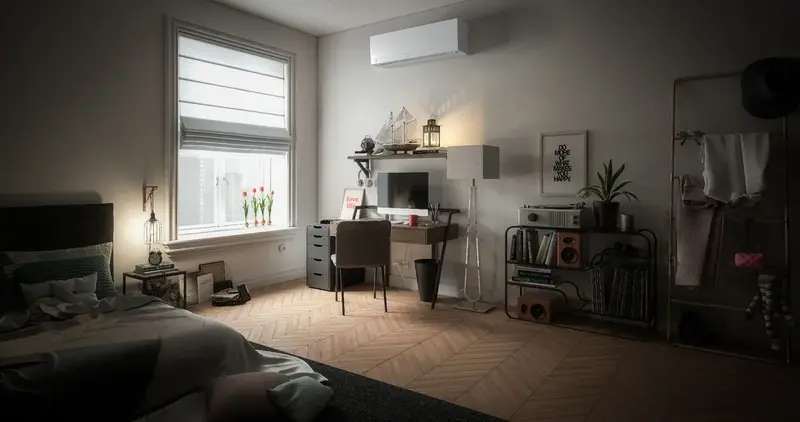
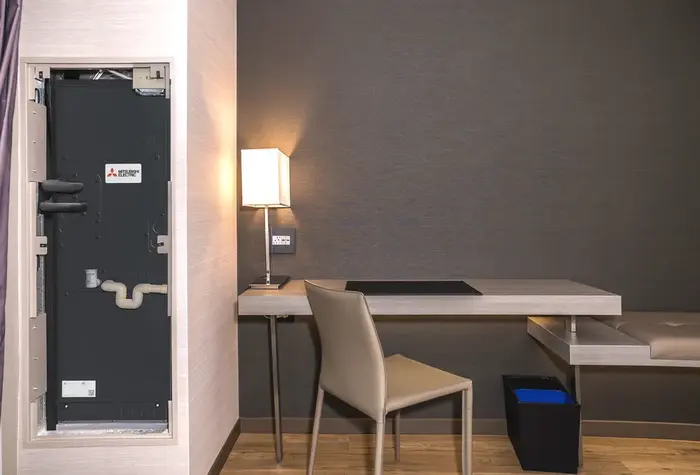
- Architectural preservation: No visible ductwork; wall-mounted or ceiling cassette units blend into period-appropriate finishes
System Design for Historic Home Preservation
Ductless mini-splits are ideal for Bluffview and Kessler Park because:
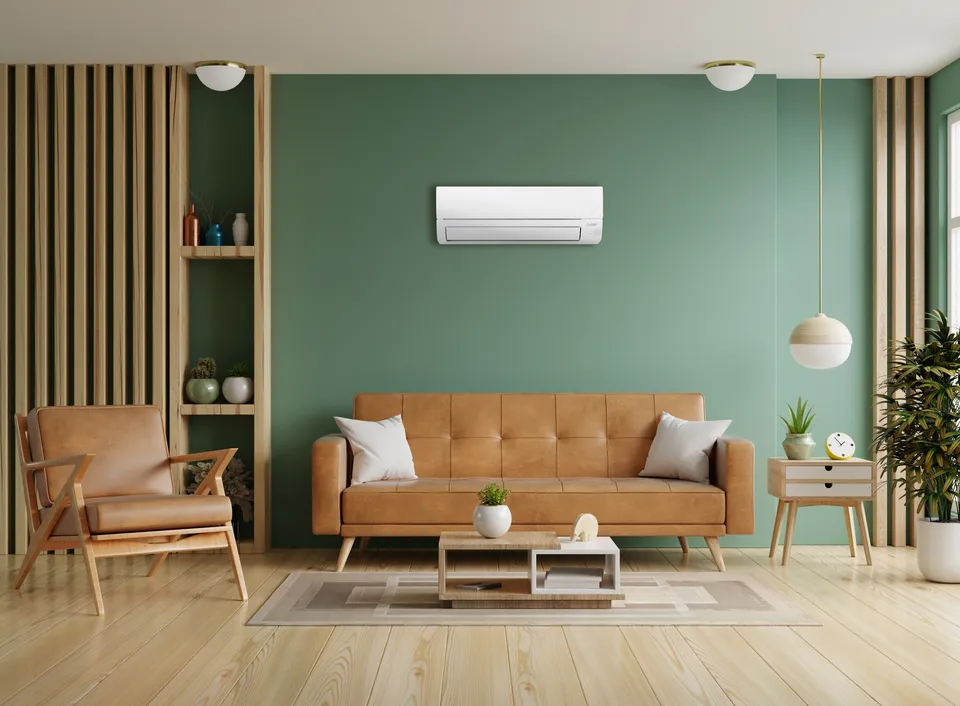
- No ductwork visible. Wall-mounted slim indoor units (white, almond, black finishes) install discreetly on interior walls or in ceilings
- Preserves period architecture. No attic access, no ceiling penetrations; original ceiling height and crown molding remain intact
- Flexible placement. Units mount in bedrooms, living rooms, libraries—wherever period room divisions exist
- Humidity independence. Each indoor unit can run at part load for dehumidification without wasting energy on over-cooling
System Recommendations by Bluffview/Kessler Park Home Type
Tudor Revival Estates (1500–2500 sq ft, complex room layout)
System: Mitsubishi MXZ-3C24NAHZ (3-zone VRF) + MSZ-FH24NA wall mounts + MLZ-FH ceiling cassettes
- Zone 1: Master bedroom (primary living/sleeping space)
- Zone 2: Secondary bedrooms + guest suite
- Zone 3: Living room + dining (open plan)
- Indoor unit finishes: Wall mounts in white or almond to match period trim; ceiling cassettes hidden in existing drop ceilings
- Humidity management: Each zone runs independently; bedrooms can prioritize dehumidification while living areas cool
- Efficiency: SEER2 22+
Why this setup:
- Addresses room-by-room thermal diversity in complex layouts
- Ceiling cassettes hide in existing Tudor ceiling soffits
- Independent dehumidification in bedrooms (critical for musty-free sleeping areas)
Colonial Revival Homes (1800–3000 sq ft, formal room plan)
System: Mitsubishi MXZ-4C36NAHZ (4-zone VRF) + mix of wall mounts and ceiling cassettes
- Zone 1: Master suite (west exposure in many Bluffview homes)
- Zone 2: Secondary bedrooms (east exposure, north-facing)
- Zone 3: Living room + dining (formal spaces)
- Zone 4: Kitchen + service areas + hallway
- Placement strategy: Wall mounts in secondary spaces, ceiling cassettes in formal rooms
- Aesthetics: All finishes period-appropriate (painted to match existing trim and crown molding)
- Efficiency: SEER2 24+
Craftsman and Period Ranch (1200–1800 sq ft, moderate complexity)
System: Mitsubishi MSZ-FH18NA (1.5 ton) + MSZ-FH24NA (2 ton) dual-zone setup
- Zone 1: Bedrooms (west-facing heat gain)
- Zone 2: Living areas + kitchen (primary load)
- Wall mounts: Match existing trim color and style
- Simplicity advantage: 2-zone system is easy to manage; dehumidification benefits still apply
- Installation ease: Minimal wall/ceiling penetrations; preserves period aesthetic
- Efficiency: SEER2 22+
Real Numbers: Costs, Savings, and Long-Term Value in Historic Neighborhoods
Equipment and Installation
- 2-zone system: $3,500–$5,000 (equipment + installation)
- 3-zone system: $4,500–$6,500
- 4-zone system: $5,500–$7,500
- Typical Bluffview home: 3-zone system = $4,500–$6,000 installed
Energy Savings in Bluffview/Kessler Park Context
- Current aging central system: $160–$250/month (peak summer)
- Mitsubishi 3-zone mini-split: $100–$140/month (peak summer)
- Monthly savings: $60–$110
- Annual savings: $720–$1,320
- Payback period: 5–7 years on equipment cost
- System lifespan: 20+ years (ductless inverter systems with minimal maintenance)
Mitsubishi 12-Year Diamond Dealer Warranty
- Parts + labor coverage: 12 years
- Truficient handles all registration and claims
- Peace of mind for historic home investment
Texas Heat Pump Rebate
- Up to $2,500 for replacing electric AC with inverter heat pump mini-split
- Mitsubishi systems qualify: SEER2 18+
- Truficient handles rebate paperwork
Long-Term Value for Bluffview/Kessler Park Homes
- Equipment + installation (after rebates): $2,000–$4,000
- Annual energy savings: $900–$1,300
- Eliminated mold/humidity problems: Priceless (no attic/duct remediation)
- Architectural preservation: +$5,000–$10,000 resale value (modern, efficient system respects period character)
Why Ductless Makes Sense for Bluffview and Kessler Park
- Humidity control independent of temperature. Modulating mini-split handles sustained high humidity even at moderate setpoints
- No ductwork = no mold. Eliminates attic condensation, duct contamination, and musty air circulation
- Architectural preservation. Wall-mounted and ceiling cassette units blend seamlessly into period homes; no visible ductwork
- Quiet operation. 22–25 dB respects Bluffview's tranquil, wooded character
- Flexible zoning. Each room can be managed independently; dehumidification can run in bedrooms while living areas handle different loads
- Direct air delivery. No ductwork losses; clean, fresh conditioned air
- Long lifespan. 20+ year systems with 12-year Diamond Dealer warranty
Ready to Solve Bluffview's Humidity Problem?
Bluffview and Kessler Park neighborhoods are architecturally distinctive and environmentally beautiful. Yet wooded ravine terrain traps humid air, and aging central systems can't handle dehumidification independent of cooling.
Mitsubishi ductless mini-splits are engineered for this exact problem: sustained humidity + moderate cooling demand + architectural preservation.
Your next step:
- Request a Free Home Evaluation — we'll assess your humidity challenge, room-by-room cooling needs, and design a system that preserves your home's character
- Call 214-238-4349 for a free consultation
Truficient handles all rebates, financing, warranty registration, and period-appropriate installation finishes.
See How Oak Cliff and Historic Dallas Neighborhoods Upgraded Their HVAC
- Ductless cooling for historic homes explained → Ductless HVAC Bluffview Dallas
- Mitsubishi mini-split technology overview → Mitsubishi Mini-Split Cooling Dallas
- Dallas urban heat island impacts on AC → Dallas Urban Heat Island HVAC Solutions
Final CTA
Truficient Energy Solutions | Mitsubishi Diamond Dealer
📞 214-238-4349 📍 Serving Bluffview, Kessler Park, Oak Cliff
Request a Free Evaluation | View Ductless Options | See Historic Home Projects
Tools to Help You Decide
See Our Bluffview / Kessler Park Installations
Browse photos from real mini-split and heat pump installations in Bluffview / Kessler Park homes.
Get an Instant Estimate
Answer a few questions about your home and get a ballpark cost for your project.
Scan Your Home's Efficiency
Find out where your home is losing conditioned air and what upgrades make the most sense.