HVAC Service for Duncanville, Texas
Heat pump replacement, ductless mini-split installation, and AC repair throughout Duncanville. → Request a Quote or call 214-238-4349
About Duncanville
Duncanville is a Best Southwest Dallas suburb of about 39,000 residents, immediately south of Dallas across the Interstate 20 boundary. The city is bounded roughly by I-20 to the north, US-67 to the east, Wheatland Road and Cedar Hill to the south, and Grand Prairie to the west. The city covers ZIP codes 75116 and 75137. Cedar Hill State Park and Joe Pool Lake sit minutes to the west, and the Duncanville High School "Pantherland" campus anchors the central part of town.
Duncanville's housing stock is predominantly 1960s through 1980s suburban construction — single-story brick ranch homes, split-level homes, and 1970s-era subdivision developments. Lot sizes are larger than the inner Dallas neighborhoods, typically 8,500 to 15,000 square feet, with two-car attached garages. Floor plans range from 1,500 to 2,800 square feet, and most homes have the standard suburban orientation with bedroom wings on one side, living areas on the other. Original ductwork was designed in from construction; central HVAC has always been part of the home.
Duncanville has remained a stable middle-class suburban community with strong long-term ownership and family-driven neighborhoods. Many homes are second-generation owners now, which means the original 1970s-1980s HVAC equipment has been replaced once and is now in its second replacement window. For HVAC, the housing profile creates a consistent set of conditions: 40-to-60-year-old homes with original ductwork, second-generation HVAC equipment that's now 10 to 20 years old, and homeowners thinking about the next replacement decision.
The HVAC Reality in Duncanville
Original ductwork is now 40-60 years old. Duncanville homes were designed with central HVAC from construction. The ductwork is in attic spaces with reasonable clearance, sized for the cooling loads and equipment specifications of the era. After multiple decades sitting in attic temperatures that exceed 130°F during a Dallas summer, that ductwork has aged. Insulation has compressed, joints have separated, and conditioned air loss runs 20 to 30 percent in many homes. Before the next system replacement, the ductwork condition needs to be evaluated honestly.
Second-generation single-stage equipment. Most Duncanville homes are running their second HVAC system — a 2005 to 2015 vintage single-stage AC paired with a gas furnace. These systems are now in the replacement window. Single-stage equipment runs at 100 percent capacity when on and off when not, which is the least efficient operating profile available. Inverter-driven replacement equipment running at part-load through most of the cooling season cuts electrical demand meaningfully.
Full-sun exposure on suburban lots. Unlike the mature-canopy inner Dallas neighborhoods, many Duncanville lots have limited tree shading on the original construction. Roof and wall surfaces absorb full afternoon sun on south- and west-facing exposures, which drives the cooling load up significantly during peak summer hours. The cooling system is doing more work in Duncanville than in similarly sized Lakewood or M Streets homes simply because of solar gain.
Rising electricity costs. Texas residential electricity rates have risen more than 40 percent over the last decade according to U.S. Energy Information Administration data. For a Duncanville homeowner running an aging single-stage system through a six-month cooling season under full-sun exposure, the rate increase compounds with the system's degraded efficiency. Replacement equipment running on inverter modulation cuts that cost meaningfully.
What HVAC Solutions Work in Duncanville
Inverter-driven ducted heat pump replacement. For most Duncanville homes where the original ductwork is salvageable, the right replacement path is a Mitsubishi SVZ-KP or SUZ-KA ducted inverter heat pump that drops into the existing distribution system. Inverter modulation reduces electrical demand at part-load conditions — which is most of the cooling season — and the all-electric heat pump replaces both the AC and the gas furnace in a single system.
Multi-zone ductless for problem layouts. For Duncanville homes with chronic temperature differentials between bedroom wings and living areas, or for split-level floor plans where the upper level runs warmer than the lower, a Mitsubishi MXZ multi-zone system with two to four indoor units provides independent control by zone.
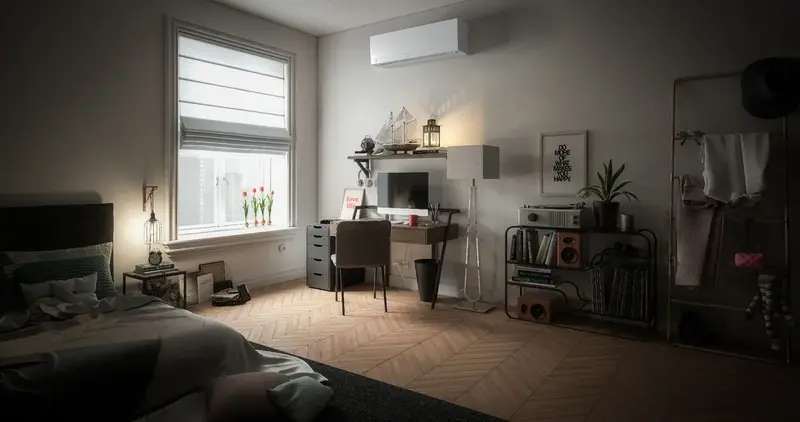
Single-zone supplemental for problem rooms. Sun-exposed master bedrooms, converted garage workspaces, and back additions are common Duncanville candidates for single-zone mini-splits. A single-zone unit adds capacity exactly where needed without modifying the central system.
AC repair on equipment with remaining useful life. Systems under 10 years old with isolated component failures are often worth repairing. We provide honest diagnostics and honest quotes — no push to replace functional equipment.
R32 Refrigerant and the EPA Transition
Every Mitsubishi mini-split installed today uses R32 refrigerant. Under EPA AIM Act regulations that took effect January 1, 2025, new residential mini-split equipment can no longer be manufactured with R410A. R32 has a global warming potential of 675 — roughly 68 percent lower than R410A's 2,088. For a Duncanville homeowner replacing now, the practical significance is that current installations use refrigerant the industry is moving toward. R410A service availability will tighten over the next decade.
Equipment Choices for Duncanville Homes
Truficient is a Mitsubishi Diamond Dealer with the 12-year parts and compressor warranty included on all qualifying Mitsubishi installations. The systems we install most often in Duncanville:
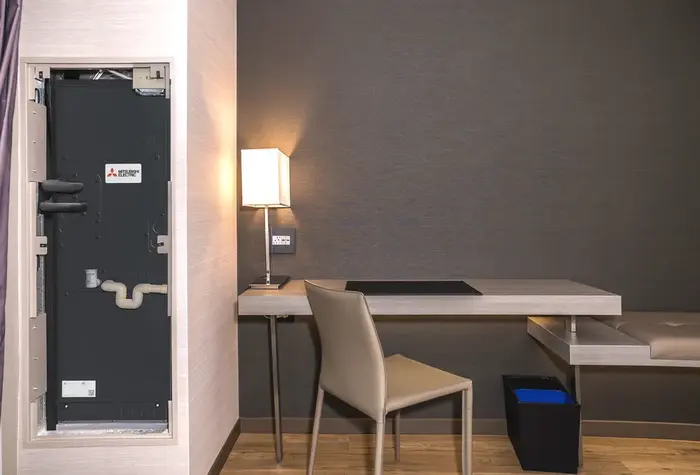
- Mitsubishi SVZ-KP slim-duct heat pumps — drop-in replacements for the existing ducted equipment in most Duncanville homes
- Mitsubishi SUZ-KA outdoor units paired with PVA air handlers — full ducted system replacement when the existing air handler is also at end of life
- Mitsubishi MXZ multi-zone systems — two-, three-, and four-zone configurations for split-level homes and homes with chronic room-to-room temperature differentials
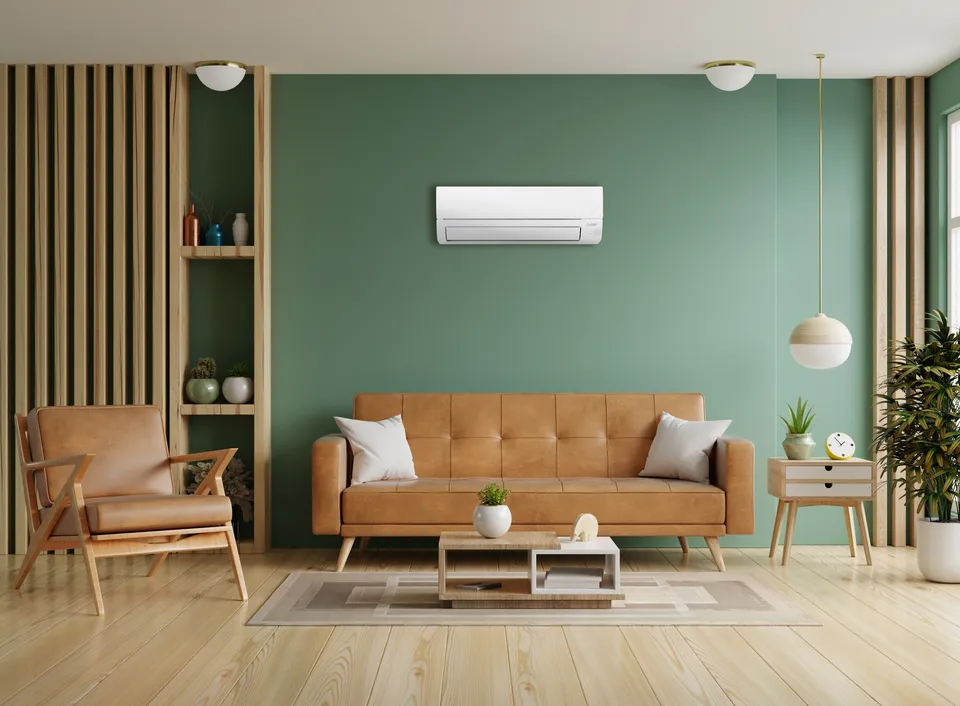
- Mitsubishi MSZ-FS wall-mounted indoor units — for ductless installations
- Mitsubishi Hyper-Heat (H2i) outdoor units — handles North Texas February cold snaps without backup heat strips
Why Truficient for Duncanville
Truficient's approach in Duncanville is honest and engineering-driven. We don't push ductless systems on homes where ducted is the better answer, and we don't push full replacements on equipment that's still serviceable. The system design starts with a Manual J load calculation that accounts for the actual envelope, insulation level, and solar exposure of the home. The existing ductwork gets evaluated honestly. The recommendation follows from what the home actually needs.
Eric, Truficient's owner and the engineer behind every install, runs every Duncanville assessment personally. Manual J load calculations account for the building envelope of 1960s-1980s suburban construction — original or upgraded windows, attic insulation levels, full-sun exposure, and the typical bedroom-wing-vs-living-area zoning challenge.
For dedicated service pages in Duncanville, see mini-split installation in Duncanville, heat pump replacement in Duncanville, and AC repair in Duncanville. The 75116 ZIP page covers the broader area. For homes near the I-20 boundary into Dallas, see also our Red Bird and Southwest Dallas hub.
Get HVAC Service in Duncanville
Call 214-238-4349 or request a quote online and we'll schedule a site assessment.
Truficient is a Mitsubishi Diamond Dealer. 12-year warranty on all qualifying installations. Serving Duncanville and the broader 75116 / 75137 area.
Tools to Help You Decide
See Our Duncanville Installations
Browse photos from real mini-split and heat pump installations in Duncanville homes.
Get an Instant Estimate
Answer a few questions about your home and get a ballpark cost for your project.
Scan Your Home's Efficiency
Find out where your home is losing conditioned air and what upgrades make the most sense.