Daikin Aurora Single-Zone Mini Split — Dallas TX Installation
Daikin Aurora installation across Dallas. Call 214-238-4349 or request a quote.
What the Daikin Aurora Is and Who It's For
The Daikin Aurora is Daikin's single-zone cold-climate inverter mini split — a wall-mounted ductless system designed to deliver full heating capacity at outdoor temperatures well below anything Dallas typically sees. The Aurora is the spec-forward option in Daikin's residential lineup, positioned for buyers who want maximum cold-weather heating performance and high efficiency in a single-room or supplemental-room application.
For a Dallas homeowner, the Aurora is the right specification when:
- A single specific room needs conditioning — a sun-exposed master bedroom, a finished garage, a converted attic space, a back addition, a home office over the garage
- Maximum heating performance matters — for the rare February cold snaps that drop Dallas overnight lows into the teens or single digits
- Efficiency is a primary purchasing criterion alongside performance
- The home already has functional central HVAC and the Aurora is solving a specific problem the central system can't reach
The Aurora is not the typical answer for whole-home ductless replacement (that's Aurora Multi-Zone or VRV territory) — it's a single-room solution specifically.
Daikin Aurora Specifications
The Aurora line includes capacities from 9,000 BTU to 36,000 BTU, covering most single-zone Dallas applications:
- Capacity range: 9,000 / 12,000 / 15,000 / 18,000 / 24,000 / 30,000 / 36,000 BTU
- Cooling efficiency: Up to 24.5 SEER2 on the highest-efficiency models
- Heating efficiency: Up to 13.0 HSPF2
- Cold-climate heating: Continued operation down to -13°F outdoor ambient, with full rated heating capacity at 5°F
- Refrigerant: R-32 single-component refrigerant, GWP 675
- Indoor unit sound: As low as 19 dB(A) on whisper mode
- Outdoor unit sound: As low as 49 dB(A)
- Warranty: 12-year compressor warranty when installed by a Daikin Comfort Pro
- Smart features: Daikin One Home app for Wi-Fi remote control and scheduling
For the typical Dallas single-zone application — a 200 to 500 square foot room — the 9,000 to 18,000 BTU range covers the load comfortably. The 24,000 BTU and larger sizes are appropriate for converted garage workshops, large great-room additions, or detached structures.
Why R-32 Refrigerant Matters
The Aurora uses R-32 refrigerant. Under EPA AIM Act regulations that took effect January 1, 2025, new residential mini split equipment can no longer be manufactured with R-410A. Daikin transitioned its full residential lineup to R-32 ahead of the regulatory deadline.
R-32 has a global warming potential of 675 — roughly 68 percent lower than R-410A's 2,088 GWP. R-32 is also a single-component refrigerant rather than a blend, which means it doesn't fractionate when a small leak develops; it services cleanly with simple charging procedures. For a Dallas buyer, the practical significance is that current Aurora installations use refrigerant the industry is moving toward, not away from. R-410A service availability will tighten over the coming decade. More on Daikin's R-32 transition →
R-32 is classified A2L — mildly flammable — requiring A2L-certified installation. Truficient technicians are A2L-certified for R-32 systems.
Where Daikin Aurora Fits Best in Dallas Applications
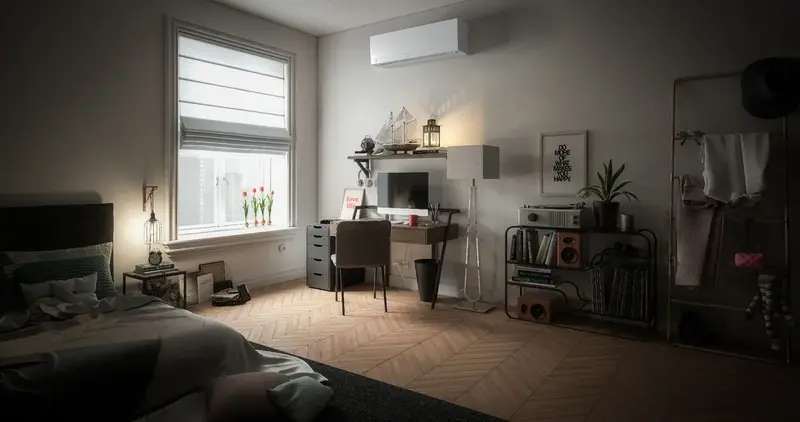
Sun-exposed master bedrooms. The classic Dallas chronic-comfort problem: a master bedroom on the west side of the house that the central system can't keep cool in summer afternoons. A 9,000 or 12,000 BTU Aurora handles a typical 250 to 400 square foot bedroom cleanly, runs as low as 19 dB(A) for sleep-friendly operation, and adds independent control without modifying the central system.
Converted garages and home offices. Detached garage offices, finished garage workspaces, and converted bonus rooms over the garage typically don't have central HVAC integration. A single-zone Aurora at 12,000 to 24,000 BTU (depending on insulation and size) is the standard solution.
Back additions and sunrooms. Additions built later than the original home rarely tie into the central HVAC properly. A single-zone Aurora dedicates its capacity to that addition without affecting the rest of the home.
ADUs and detached structures. Accessory dwelling units, pool houses, and detached studio spaces are clean Aurora applications — independent system, simple line-set routing, year-round heating and cooling from a single unit.
Aurora vs. the Aurora Multi-Zone
The Aurora single-zone is one outdoor unit serving one indoor unit. For homes that need multiple rooms conditioned independently, the Daikin Aurora Multi-Zone serves up to five indoor units from a single outdoor condenser. See Daikin Aurora Multi-Zone for Dallas →
The single-zone is simpler, lower-cost per unit, and the right answer when the application is a single defined space. The multi-zone makes sense when three or more rooms need independent control from a centralized outdoor unit.
Aurora vs. Mitsubishi Single-Zone
The two leading single-zone cold-climate mini splits in the Dallas residential market are the Daikin Aurora and the Mitsubishi MSZ-FS / Hyper-Heat lineup. Both are top-spec premium equipment. The differences are real but narrow:
- Cold-climate heating extends slightly further on Mitsubishi — Hyper-Heat outdoor units rated for continued operation to -13°F with full rated capacity at 5°F (closely comparable to Aurora's -13°F continued operation rating).
- Aurora indoor unit sound floor is comparable — both lines reach 19 dB(A) on whisper mode.
- Daikin's contractor network includes Daikin Comfort Pros; Mitsubishi has the Diamond Dealer program. Both offer 12-year warranties on qualifying installations.
- Refrigerant: both use R-32.
For most Dallas single-zone applications, the choice between Aurora and Mitsubishi single-zone comes down to contractor relationship, model availability, and homeowner preference rather than a clear performance differential. Full comparison →
What the Installation Looks Like
Assessment. We size the Aurora for the actual room load using Manual J calculations — not rule-of-thumb tonnage. Oversized equipment short-cycles and fails to dehumidify; undersized equipment runs continuously and never reaches setpoint. Right-sized equipment is the install we deliver.
Outdoor unit placement. The Aurora outdoor unit is roughly the size of a small carry-on suitcase. We plan placement for setback clearance, neighbor consideration, and short line-set runs (which preserve performance and efficiency).
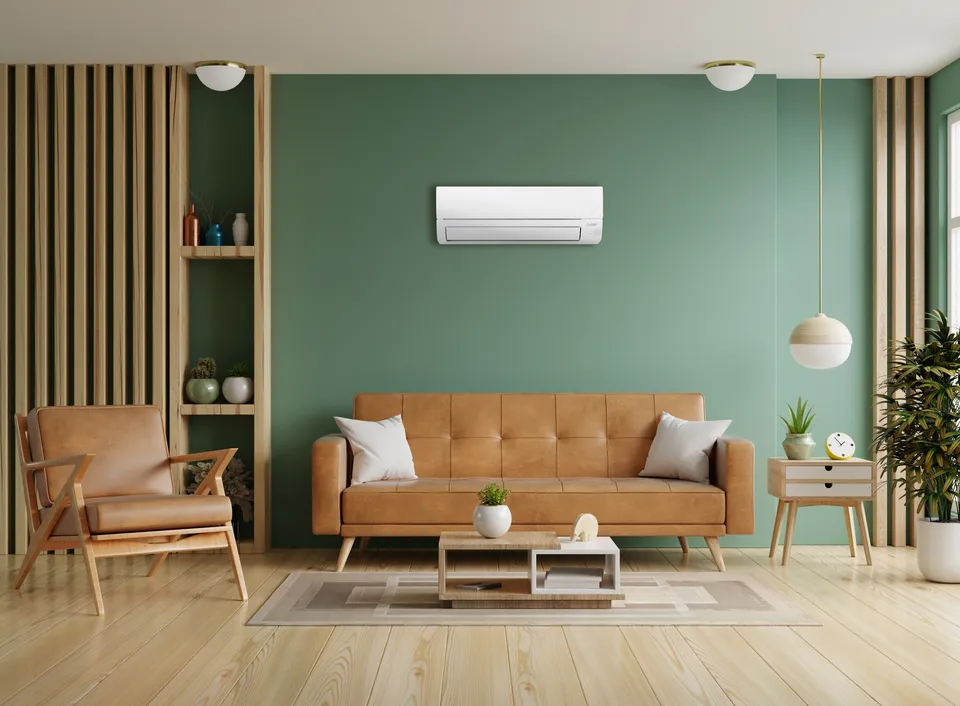
Indoor unit mounting. Wall-mounted at roughly seven feet of height, on an interior or exterior wall depending on the room layout. Line set, condensate drain, and control wiring run through a small wall penetration.
Installation day. A typical single-zone Aurora installation is four to eight hours.
Testing and walkthrough. Before leaving, we confirm cooling and heating performance, verify condensate drainage, and walk through controller and Daikin One Home app operation.
Serving Daikin Customers Across Dallas
Truficient installs Daikin Aurora systems throughout Dallas, including Oak Cliff, East Dallas, Lakewood, Highland Park, Preston Hollow, Lake Highlands, and the broader inner-loop. For a single-zone application in your home, we'll spec the right capacity and design the install around the room.
For broader Daikin lineup context, see our Daikin mini split Dallas overview. For multi-zone applications, see Daikin Aurora Multi-Zone. For Aurora-specific R-32 details, see Daikin R-32 mini split. For comparison shopping, see Daikin vs Mitsubishi Dallas. For Oak Cliff specifically, see Oak Cliff mini-split installation.
Get a Daikin Aurora Quote for Your Dallas Home
Call 214-238-4349 to talk through your application, or request a quote online for a site assessment.
Truficient installs Daikin Aurora and the broader Daikin residential lineup throughout Dallas.
Tools to Help You Decide
See Our Dallas (Daikin Aurora) Installations
Browse photos from real mini-split and heat pump installations in Dallas (Daikin Aurora) homes.
Get an Instant Estimate
Answer a few questions about your home and get a ballpark cost for your project.
Scan Your Home's Efficiency
Find out where your home is losing conditioned air and what upgrades make the most sense.