Commercial HVAC Maintenance — Dallas TX
Preventive maintenance agreements for Dallas businesses. Keep RTUs, mini-splits, and VRF systems running through the Dallas summer. → Request a Quote or call 214-238-4349
Why Commercial HVAC Maintenance Actually Matters in Dallas
Commercial HVAC equipment in Dallas runs harder than it does in most of the country. Cooling season is six to seven months long, peak ambient temperatures exceed 100°F for extended stretches, rooftop unit surface temperatures run well past that, and the combination accelerates wear on every component from compressors to contactors. A commercial RTU that might give fifteen years of service in a milder climate often fails earlier in Dallas — not because the equipment is defective, but because the duty cycle is punishing and maintenance gets skipped.
The business case for preventive maintenance isn't complicated: a scheduled tune-up costs a fraction of an emergency service call, prevents the specific failure modes that produce those emergencies, and keeps equipment operating at the efficiency level the manufacturer designed for. Skipped maintenance compounds — dirty coils drop heat transfer, worn contactors drive up compressor stress, failed condensate drains create water damage, dead belt-drive motors shut down the system entirely. Each of these is preventable on a proper maintenance schedule.
Truficient provides commercial HVAC maintenance across Dallas — scheduled preventive service, full service agreements, and single-visit tune-ups — for small and mid-size buildings. This page covers what's in a real commercial maintenance scope and how agreement structures work.
What's Actually Included in a Commercial PM Visit
A commercial preventive maintenance visit isn't a filter swap. A proper scope for a rooftop packaged unit includes:
Filter replacement and filter housing inspection. Filters changed to spec (typically MERV 8 to MERV 13 depending on the application), housing inspected for bypass leakage, filter change interval confirmed and logged.
Coil cleaning. Evaporator and condenser coils inspected and cleaned as needed. A dirty condenser coil on a Dallas rooftop drops capacity by 10 to 20 percent and drives head pressure up — the compressor runs hotter, longer, and fails earlier. Coil cleaning on a seasonal schedule is one of the highest-value maintenance items.
Refrigerant charge verification. Superheat and subcooling measured against manufacturer spec. Undercharge and overcharge both degrade efficiency and damage the compressor. Not every PM visit requires refrigerant work, but charge verification should happen on every cooling-season visit.
Electrical inspection. Contactors inspected for pitting and burn-through, capacitors tested against rated values, wiring connections torqued, disconnects verified. Electrical component failure is one of the most common commercial breakdown causes in Dallas summers and almost always visible in advance.
Blower and belt service. Blower wheels inspected for debris and balance, belts checked for wear and tension (on belt-drive units), bearings lubricated per spec.
Condensate system. Drain pan inspected, condensate line flushed, trap integrity confirmed. A clogged condensate line is a water-damage event waiting to happen — and it happens during peak cooling, which is exactly when nobody wants water dripping through a drop ceiling onto a retail floor.
Controls and safety checks. Thermostat calibration, low-voltage controls tested, high and low pressure safety switches verified, gas train inspection on heating-equipped units.
Airflow verification. Supply and return airflow measured, return air temperature and supply air temperature confirmed to manufacturer delta, any ductwork issues noted for follow-up.
Documentation. Written report of findings, equipment condition, work performed, and any deferred items for the owner's record.
Maintenance Scope by Equipment Type
Packaged rooftop units (RTUs). The scope above is the standard RTU maintenance visit. Dallas rooftop units benefit from twice-yearly service — a spring visit before cooling season begins and a fall visit before heating season — to catch issues before peak demand.
Split systems (indoor air handler plus outdoor condenser). Similar scope to RTUs, with the indoor air handler and outdoor condenser addressed separately. Indoor coil access is often easier than on rooftop equipment, which makes deep coil cleaning more practical.
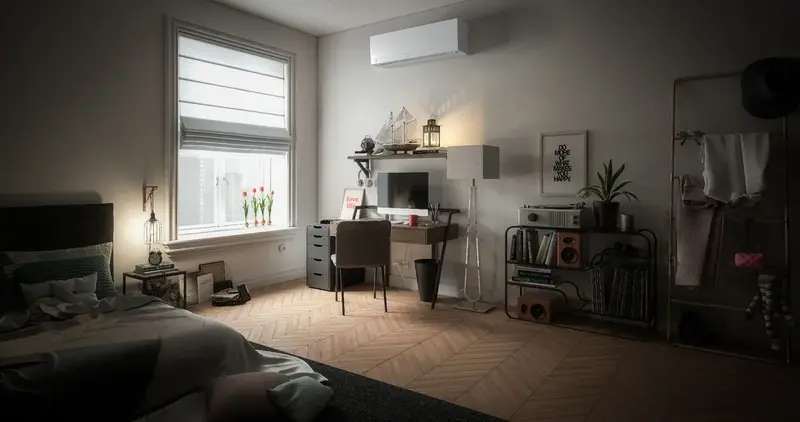
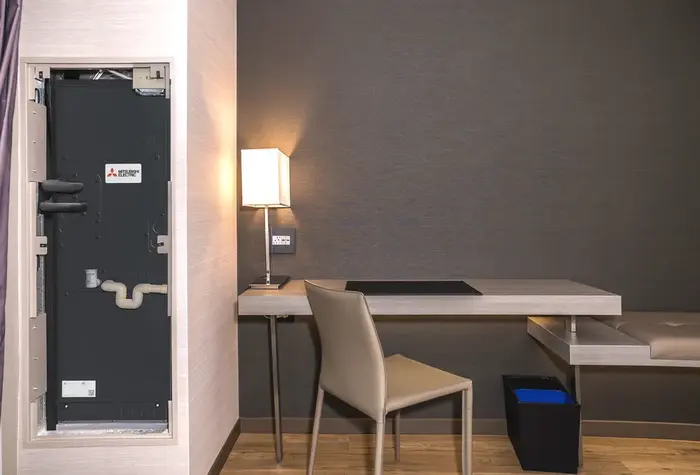
Commercial mini-splits and VRF. Ductless and VRF maintenance is different in character than packaged unit maintenance. Filters are washable and replaced on a different cadence, coil cleaning is done with specific products for microchannel coils on newer units, refrigerant work on VRF requires technicians familiar with the specific brand's tooling, and controls diagnostics are done through brand-specific interfaces. Truficient technicians are trained on Mitsubishi, Daikin, and Gree commercial lines.
Packaged heat pumps. Heat pump maintenance includes everything on an AC-only RTU scope, plus defrost cycle verification, reversing valve function, and — for cold-climate models — low-temperature operation confirmation.
Service Agreement Structures
Commercial HVAC maintenance typically works through one of three agreement structures:
Scheduled PM agreement. A fixed number of visits per year (most commonly two — spring and fall) covering the preventive scope above. Repair work is billed separately at an agreed rate, usually with a PM-customer discount on labor and priority scheduling during high-demand periods.
Full service agreement. PM plus defined repair coverage. Specific failures are covered under the agreement; major component replacement is typically excluded or separately priced. This structure makes sense for buildings with multiple units where repair frequency is predictable.
Single-visit tune-up. For buildings that don't need an ongoing agreement — owner-occupied spaces, tenants who prefer to call as needed — a single tune-up in spring covers the preventive scope with no ongoing commitment.
Truficient offers all three structures. The right choice depends on equipment age, building complexity, tenant arrangement, and the owner's internal capacity for managing service calls.
Dallas-Specific Maintenance Priorities
Spring cooling prep is non-negotiable. A commercial unit that hasn't been touched since the previous summer will reveal its weak points on the first hot day in May. A spring PM visit — ideally completed in March or early April — catches winter-accumulated issues before they become cooling-season failures.
Condenser coil cleaning in Dallas has to happen. Rooftop condenser coils in Dallas collect dust, cottonwood fluff in spring, and accumulated pollen and debris that measurably degrade heat rejection. Skipping condenser cleaning is one of the most common causes of "the system is working but not cooling like it used to" in Dallas commercial buildings.
Refrigerant leak detection is worth the extra time. R-410A supply has tightened and pricing has moved. A small leak on a commercial RTU that goes undetected becomes an expensive refrigerant recharge on the next service call. Pressure and subcooling trending across visits catches leaks early.
Winter heating checks for freeze-event reliability. Dallas freeze events — 2021, 2023, 2024 — exposed which commercial heating systems worked and which didn't. A fall maintenance visit with proper gas train inspection, ignition verification, and defrost cycle check on heat pump equipment is what separates buildings that stay operational during a freeze from buildings that lose heat.
Filter schedules matched to the space. A restaurant filter schedule is not an office filter schedule. Kitchen grease and particulate load require more frequent changes. Matching filter intervals to the actual space use — not a generic quarterly schedule — is part of a real PM agreement.
Emergency and Reactive Service
Preventive maintenance reduces emergency calls but doesn't eliminate them. For Dallas commercial customers on a Truficient service agreement, priority scheduling during peak demand periods is part of the arrangement. For customers without an agreement, emergency service is available on a call-as-needed basis, with response times dependent on current demand — which during a July heat wave means waiting behind customers already under contract.
This is one of the reasons the agreement model exists: when the equipment fails at 2pm on a 108°F afternoon and every commercial contractor in Dallas is fully booked, being on a service agreement is what gets a technician dispatched within hours instead of days.
Get a Commercial Maintenance Quote
For Dallas businesses that want a real preventive maintenance agreement — with a documented scope, scheduled visits, and a clear cost structure — the starting point is a site visit to inventory equipment and understand the building.
Call 214-238-4349 to schedule a maintenance assessment, or request one online.
Truficient provides commercial HVAC maintenance for small and mid-size buildings throughout Dallas. For new equipment installation and replacement, see commercial HVAC installation in Dallas. For refrigeration-side service, see commercial refrigeration repair in Dallas.
<section class="bach-internal-links"> <h3>Related Resources</h3> <ul><li><a href="/commercial-hvac-installation-dallas/">Commercial HVAC installation</a></li><li><a href="/vrf-systems-dallas/">VRF systems for Dallas commercial</a></li></ul> </section>Tools to Help You Decide
See Our Dallas-wide Installations
Browse photos from real mini-split and heat pump installations in Dallas-wide homes.
Get an Instant Estimate
Answer a few questions about your home and get a ballpark cost for your project.
Scan Your Home's Efficiency
Find out where your home is losing conditioned air and what upgrades make the most sense.