Commercial rooftop HVAC unit replacement for Dallas commercial properties — like-for-like RTU replacement, mini-split and VRF platform conversion, and portfolio capital planning across retail, office, and light industrial buildings. → Request a Commercial Assessment or call 214-238-4349
What Drives a Commercial RTU Replacement Decision
A commercial packaged rooftop unit (RTU) reaching end of life forces a specific decision point for the property owner: replace with a like-for-like unit, or use the replacement event as the trigger to convert the building to a different HVAC architecture. The right answer depends on six variables that deserve deliberate evaluation rather than default "replace what's there" thinking.
Building hold horizon. Properties held long-term benefit more from architecture conversion than properties being prepped for near-term disposition. A 3-year hold with an RTU at end of life typically favors like-for-like replacement; a 10+ year hold with the same failing RTU typically favors evaluating VRF or mini-split conversion.
Tenant structure. Multi-tenant buildings where tenants pay their own utilities benefit from VRF conversion far more than single-tenant buildings where the owner absorbs the utility cost. The per-tenant zone control and metering that VRF enables changes the lease economics in multi-tenant properties.
Building architecture and roof condition. RTUs are rooftop-placed with structural curbs. Conversion to VRF or mini-split removes the rooftop equipment and relocates outdoor condensers to side-of-building or ground-level placement. For buildings with compromised roof structure or roofs approaching replacement, removing rooftop mechanical load is a real incidental benefit.
Utility rates and trajectory. Dallas commercial electric rates and the transition trajectory of R-410A refrigerant phase-out affect the operating cost comparison between replacement paths. New R-32 and R-454B equipment is materially more efficient than the R-410A units being replaced, which favors faster-cycling replacement on aging inventory.
Tenant comfort complaint history. Properties with documented tenant comfort issues during the current RTU service life typically benefit from architecture conversion — the new RTU, even a premium unit, is unlikely to resolve zone control issues that are structurally built into the existing HVAC configuration.
Capital planning and timing. For owners managing portfolios across multiple buildings, RTU replacement events often cluster — a 1995 retail property with ten RTUs installed concurrently will typically experience failures within a 2–4 year window. Pre-planning replacement logistics and negotiating bulk equipment pricing across a portfolio produces material savings over one-off emergency replacements.
Three Paths for Commercial RTU Replacement in Dallas
Path 1: Like-for-Like RTU Replacement
Direct replacement of the existing RTU with a new unit of equivalent tonnage and configuration. Uses the existing rooftop curb (or a replacement curb sized to match), existing ductwork, and existing electrical service.
Where this is the right choice:
- Short-to-medium hold horizons (under 5 years)
- Single-tenant buildings where zone control isn't a lease issue
- Buildings with rooftop structural capacity constraints that make platform changes impractical
- Emergency replacement situations where speed-to-service matters more than long-term optimization
Typical equipment: Carrier, Trane, Daikin, Lennox, or Goodman commercial RTU platforms. Capacity 3–25 tons for typical commercial applications. R-32 and R-454B refrigerant in current production.
Typical timeline: 3–7 business days from equipment specification to commissioning, assuming standard configurations.
Cost range: $18,500 to $65,000 per unit installed for 5–15 ton commercial RTU replacement, depending on building configuration and electrical scope.
Path 2: VRF Conversion
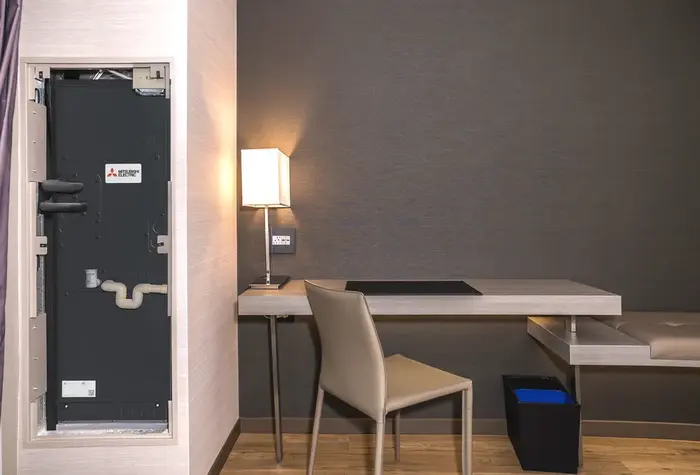
Replacement of the RTU platform with a VRF (variable refrigerant flow) system — one or more outdoor condensers serving multiple indoor units distributed through the building, with zone-level thermostatic control.
Where this is the right choice:
- Multi-tenant buildings (retail strips, medical office, small commercial)
- Long-term hold properties with tenant comfort complaint history
- Buildings undergoing concurrent renovation where rooftop equipment removal aligns with roof replacement
- Owner-occupied properties with 10+ year operational horizons
Typical equipment: Mitsubishi CITY MULTI, Samsung DVM S2, Daikin VRV, LG Multi V VRF platforms.
Typical timeline: 4–8 weeks from design to commissioning, depending on building size and complexity.
Cost range: 1.5x to 2.5x the cost of like-for-like RTU replacement for comparable capacity, offset by long-term operating cost reduction and tenant retention benefit.
Related: Commercial VRF Systems Dallas
Path 3: Mini-Split Conversion
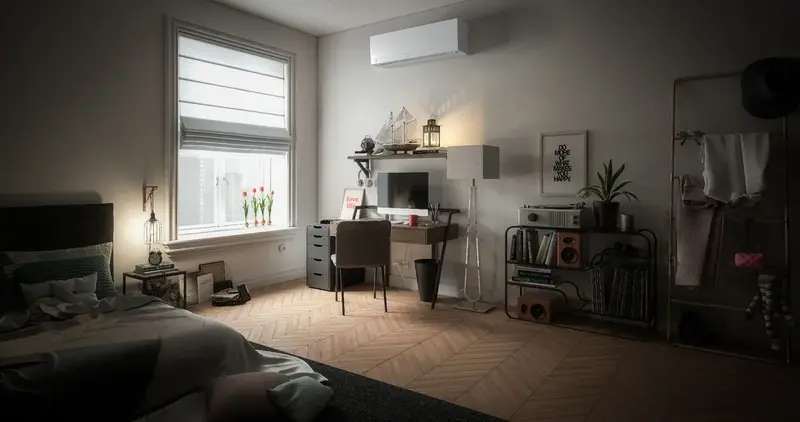
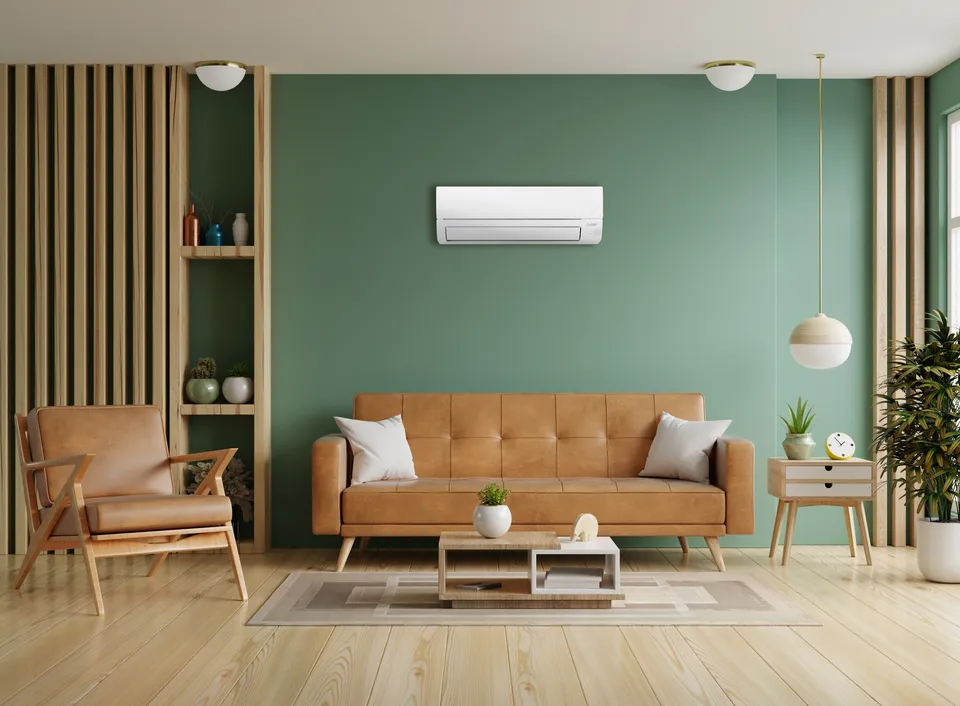
For smaller commercial buildings (retail tenants under 5,000 sq ft, creative office spaces, restaurants), ductless mini-split systems can replace the RTU platform entirely. Outdoor condensers move to ground-level or side-of-building placement; indoor units are wall-mounted, ceiling cassette, or concealed ducted.
Where this is the right choice:
- Small retail and commercial tenant buildings
- Creative office / industrial-conversion buildings where exposed ductwork aesthetics favor ceiling-cassette distribution
- Single-tenant buildings where a single-zone or two-zone configuration covers the full space
- Restaurant build-outs where kitchen and front-of-house zones benefit from independent control
Typical timeline: 1–3 weeks from design to commissioning for small-to-mid commercial applications.
Cost range: 0.8x to 1.3x the cost of like-for-like RTU replacement for smaller spaces, with operating cost savings that typically favor the mini-split path over 5+ year horizons.
Related: RTU vs Mini-Split — Small Business Dallas
The Dallas UHI Context
Commercial HVAC equipment in Dallas operates in more aggressive conditions than national average assumptions. Rooftop surface temperatures reach 140–160°F on July and August afternoons; the air intake of rooftop-placed RTUs pulls across this superheated surface, suppressing rated capacity by 15–25% and driving faster compressor and fan motor wear. The 15-year manufacturer-rated service life for commercial RTUs typically compresses to 8–12 years in Dallas commercial rooftop applications.
This service life compression is what makes RTU replacement planning a portfolio-level capital issue in Dallas. Properties with 5+ RTUs are typically managing at least one replacement event per year; properties with 20+ RTUs are managing a continuous replacement cycle.
Related: Commercial Rooftop Dallas Heat Island Impact Related: Commercial Landlord UHI Playbook
Portfolio Capital Planning
For commercial property owners and operators managing multi-building portfolios, Truficient offers portfolio-level HVAC capital planning:
- Inventory audit — documented tonnage, age, condition, refrigerant type, and service history for every unit
- 5-year replacement forecast — prioritized by expected failure timing, tenant comfort risk, and capital budget planning
- Architecture evaluation per building — which buildings favor like-for-like replacement, which favor VRF or mini-split conversion
- Bulk procurement and scheduling — vendor relationships for equipment pricing leverage across multiple replacement events
- Emergency response contracting — retainer-based service for peak-season failures
Get a Commercial HVAC Assessment
Call 214-238-4349 or request a commercial portfolio assessment and we'll schedule a building or portfolio walkthrough.
Truficient is based in Richardson, TX and serves commercial property owners across Dallas, Richardson, Plano, Garland, Mesquite, and Irving. Mitsubishi Diamond Dealer for premium residential and light commercial, with commercial VRF and RTU experience for larger properties.
Tools to Help You Decide
See Our Dallas-wide Installations
Browse photos from real mini-split and heat pump installations in Dallas-wide homes.
Get an Instant Estimate
Answer a few questions about your home and get a ballpark cost for your project.
Scan Your Home's Efficiency
Find out where your home is losing conditioned air and what upgrades make the most sense.