HVAC in Downtown Dallas: What the Concrete Canyon Effect Means for Your System
NOAA's 2023 and 2024 urban heat island studies confirmed what anyone who has walked Main Street on a July evening already knows: Downtown Dallas does not cool down at night. The high-rise towers, glass facades, and concrete plazas that define the downtown core absorb solar energy through the day and release it slowly and persistently through the evening — well past sunset, well past when surrounding lower-density neighborhoods have begun their thermal recovery.
NOAA's 2024 study found temperature differentials of up to 12°F between the hottest urban zones and the city's greener areas. Downtown consistently registered among those hot zones — not because of industrial land use like West Dallas, or proximity to highway infrastructure like the Medical District, but because of a physics phenomenon called the urban canyon effect.
The Urban Canyon: Why Downtown Heat Traps Differently
In a traditional residential neighborhood, radiant heat from pavement and rooftops can dissipate into the open sky — particularly during the evening hours when the ground radiates stored solar energy upward.
Downtown Dallas does not have open sky between buildings. The towers create corridors where reflected heat bounces between facades, wind flow is blocked, and thermal mass accumulates with no escape route. The result is a zone that:
- Maintains elevated temperatures long after sunset, eliminating the overnight recovery window that allows buildings to shed heat before the next day's cooling cycle begins
- Presents higher effective outdoor temperatures to HVAC condensers on exposed rooftops and in street-level mechanical rooms
- Generates ambient conditions for residential condos and small commercial spaces that exceed what standard load calculations, designed for typical suburban conditions, assume
HVAC for Downtown Dallas Condos
Downtown Dallas has seen substantial residential conversion over the past decade — historic office buildings repurposed as loft condominiums, new high-rise residential towers, and mixed-use developments that stack residential units above ground-floor commercial.
These residential spaces present specific HVAC challenges in a heat island context:
Orientation-dependent solar gain. A south or west-facing condo unit in a downtown high-rise accumulates substantially more solar heat load during afternoon hours than a north or east-facing unit of identical square footage. Standard central building HVAC systems often cannot differentiate between these loads — they condition the whole floor at the same temperature, creating units that are simultaneously overcooled (on the north side) and undercooled (on the southwest corner) during afternoon peaks.
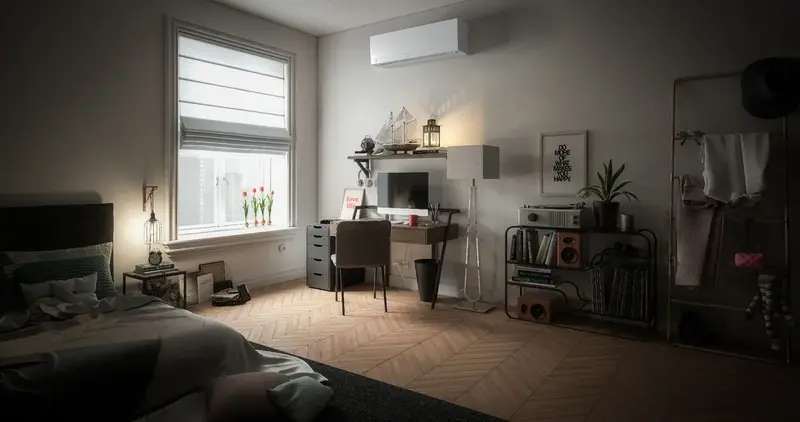
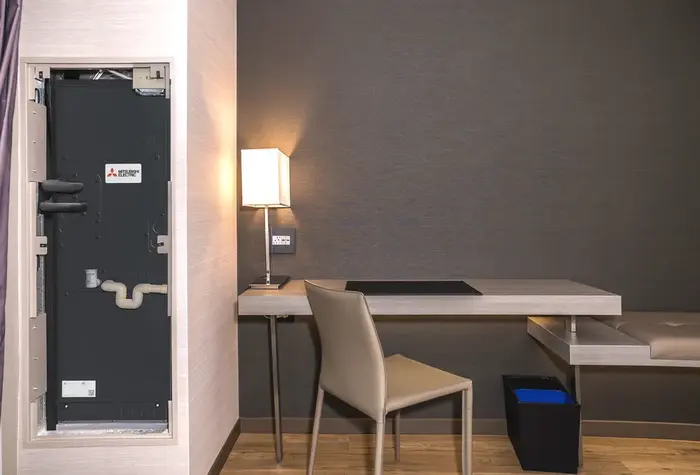
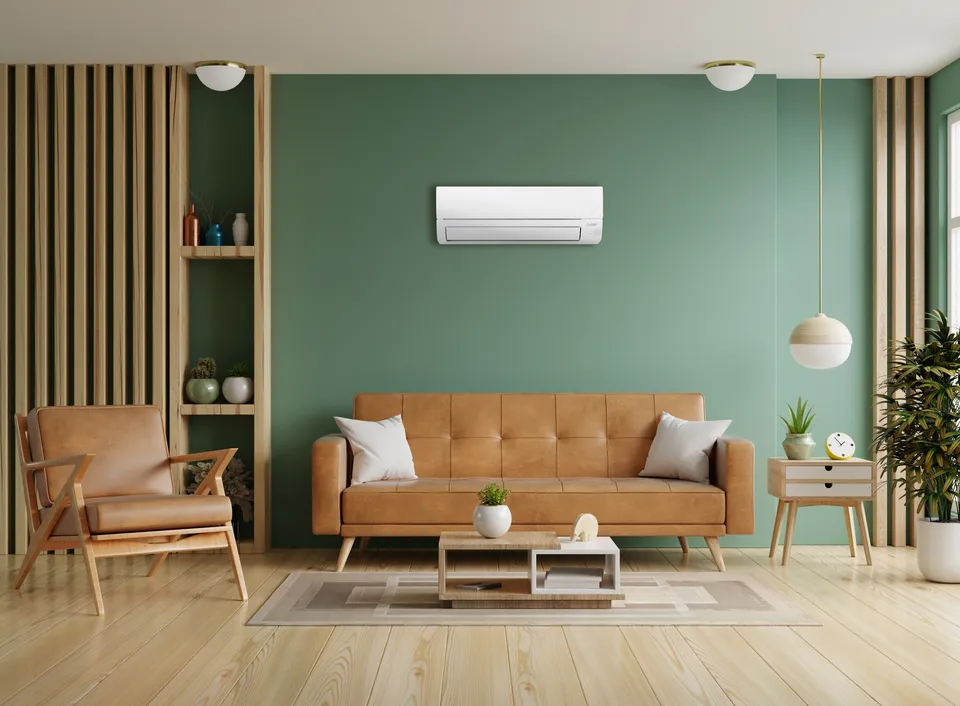
Mini-split zoning solves this problem. A properly specified multi-zone ductless system provides independent temperature control for each exposure — maintaining setpoint on the west-facing living room without overcooling the east-facing bedroom. Mitsubishi's inverter technology modulates each zone independently, delivering the right amount of cooling to each space without the energy waste and comfort problems that come from single-zone central systems in uneven solar load buildings.
Boutique Offices and Small Commercial in the Urban Core
Downtown Dallas has a substantial inventory of boutique office spaces, co-working environments, creative agencies, and small professional services firms occupying older office floors or street-level commercial spaces. These smaller tenants often inherit aging building HVAC systems or are responsible for conditioning their own leased spaces with equipment that was never sized for the building's actual microclimate.
For small commercial spaces in Downtown Dallas's heat island, commercial mini-split systems provide a practical path to right-sized, independently controlled conditioning that does not require the tenant to inherit the building's central system limitations.
Daikin and Mitsubishi both offer commercial mini-split configurations suited to 500–3,000 square foot downtown commercial spaces — with the multi-zone capability to handle open floor plans and private office configurations independently.
The Overnight Recovery Problem
One of the most damaging aspects of the downtown heat island for HVAC systems is the loss of overnight recovery. In a suburban neighborhood, outdoor temperatures may fall to 75–80°F overnight, allowing building envelopes to shed accumulated heat before the next day's cooling cycle begins. The next morning, your AC starts from a moderate baseline.
In Downtown Dallas, overnight lows in heat island zones remain elevated — sometimes by 8–10°F compared to less dense areas — because the concrete and glass facades continue releasing stored solar energy through the night. Your AC starts the next morning from a higher baseline, carries more thermal debt into the peak afternoon hours, and must work harder to maintain setpoint.
Inverter systems handle this compounding load pattern better than single-stage equipment because they can maintain continuous conditioning at partial capacity overnight — preventing the thermal debt from accumulating rather than having to sprint to recover it at peak hours.
Oncor Rebates for Downtown Dallas Properties
Downtown Dallas properties are in Oncor Electric Delivery's service territory. Oncor offers rebates of up to $1,000 for qualifying high-efficiency HVAC installations. Downtown condo owners and small commercial tenants upgrading from aging equipment should confirm their Oncor eligibility before installation.
See how Oncor rebates and Federal credits stack →
Read the full Dallas Urban Heat Island Research Report →
Tools to Help You Decide
See Our Downtown Dallas Installations
Browse photos from real mini-split and heat pump installations in Downtown Dallas homes.
Get an Instant Estimate
Answer a few questions about your home and get a ballpark cost for your project.
Scan Your Home's Efficiency
Find out where your home is losing conditioned air and what upgrades make the most sense.