HVAC in Uptown Dallas: A Neighborhood With Two Thermal Identities
Uptown Dallas is one of the most densely developed neighborhoods inside the Dallas inner loop — and like Oak Lawn immediately to its south, it carries two distinct thermal profiles depending on exactly where a property sits.
The western and central corridors of Uptown — McKinney Avenue, Cedar Springs, and the dense mid-rise and high-rise development zone between them — carry urban heat island characteristics confirmed in NOAA's Dallas studies. Dense commercial storefronts, restaurant and bar patios radiating heat from outdoor cooking and compressed crowds, high-rise glass facades capturing and reflecting solar energy, and the limited tree canopy on the primary commercial streets all contribute to sustained elevated ambient temperatures.
The eastern edge of Uptown, adjacent to the Katy Trail linear greenway, benefits from one of the same cooling mechanisms that the Turtle Creek corridor provides for Oak Lawn: evapotranspiration from maintained vegetation along a linear parkway creates a measurable cooling buffer that lowers ambient temperatures for properties within a few blocks.
NOAA's 2024 study found temperature differentials of up to 12°F between Dallas's hottest zones and its cooler areas. Uptown's commercial core sits closer to the hot end of that range; properties along the Katy Trail corridor benefit from a few degrees of natural mitigation.
The High-Rise Condo HVAC Problem in Uptown
Uptown Dallas has seen intensive high-rise residential development over the past two decades. The towers along McKinney, Cedar Springs, and Turtle Creek Boulevard represent one of the most concentrated urban residential densities in Texas. These properties share a common HVAC challenge that is specific to their building type and the heat island conditions of their location.
Orientation-dependent solar gain is extreme in high-rise buildings. A southwest-facing corner unit on the 18th floor of a Uptown tower accumulates solar heat load in the afternoon that is dramatically higher than a north-facing unit of identical square footage on the same floor. Building central HVAC systems — designed to serve the entire floor or the entire building at the same temperature — cannot differentiate between these loads. The result is that southwest-facing units are inadequately cooled while north-facing units are overcooled, regardless of what the thermostat is set to.
Building central systems are designed for average conditions, not peak unit loads. A building HVAC system specified at construction was sized for the average load across all units — not the peak load on the hottest-exposure units during the most extreme heat island conditions. As buildings age and heat island conditions intensify, the gap between system capacity and peak demand in the most exposed units widens.
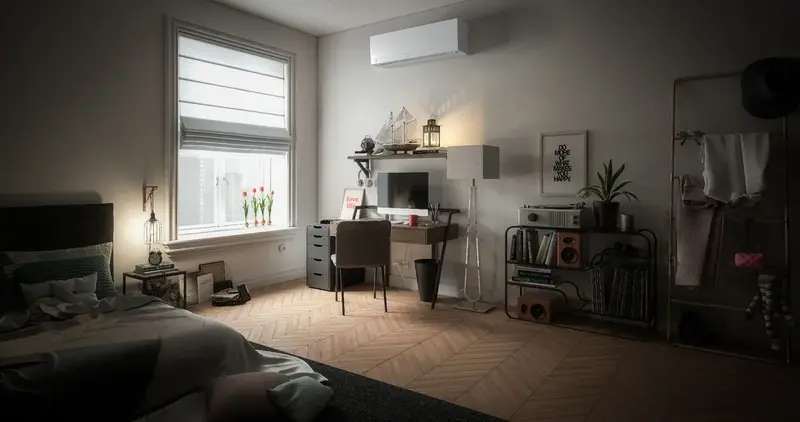
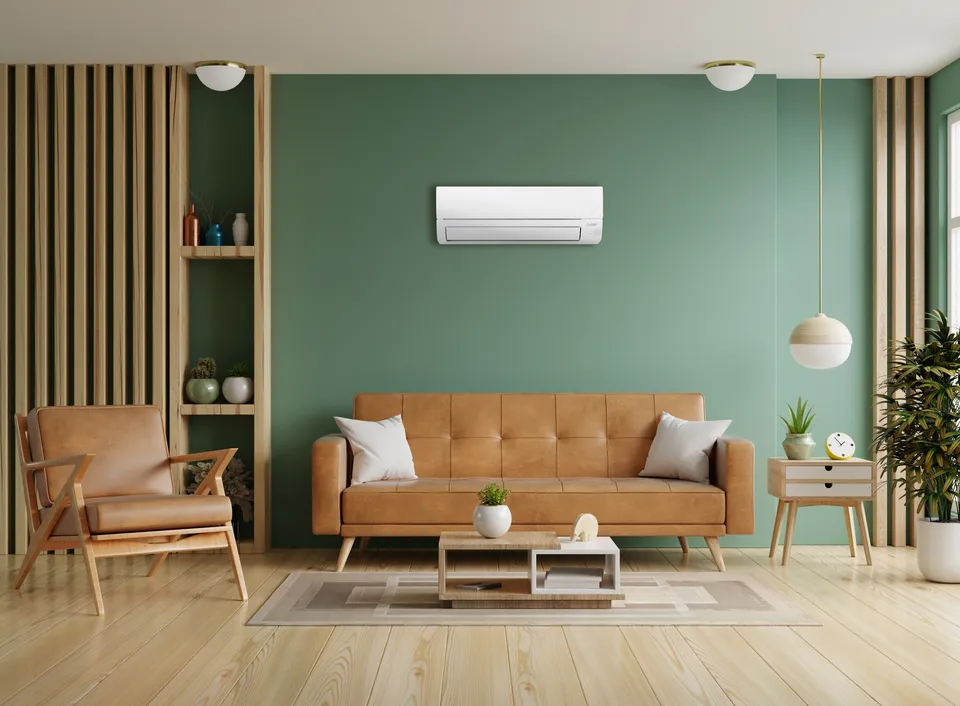
Mini-split supplemental and replacement systems solve this. For Uptown condo owners who have the ability to install their own HVAC equipment — either as supplemental to the building system or as a primary system in buildings that allow individual mechanical systems — Mitsubishi's multi-zone inverter systems provide independent zone control for each exposure.
Historic Bungalows and Low-Rise Residential in Uptown
Not all of Uptown is high-rise. The residential blocks east of McKinney and adjacent to the Katy Trail include a mix of historic bungalows, low-rise townhomes, and 1960s–1970s apartment buildings that carry the same aging ductwork and attic exposure problems as Oak Cliff's historic housing stock — but in a denser, hotter urban microclimate.
For these properties, ductless mini-split retrofits eliminate the attic duct loss problem while delivering the inverter efficiency that Uptown's heat island premium demands.
Boutique Commercial in Uptown's McKinney Corridor
Uptown's commercial character is dominated by restaurant groups, boutique retailers, salons, and professional services firms. These smaller commercial tenants frequently occupy older strip commercial buildings or ground-floor retail space in residential towers — inheriting HVAC systems that were sized for different occupancy profiles and that have aged in a heat island environment.
For Uptown commercial operators upgrading older commercial RTU equipment or managing a leased space where the building system is inadequate, Mitsubishi's commercial multi-zone configurations and Daikin's commercial mini-split systems deliver the independent zone control and high-ambient performance that McKinney Avenue's heat island conditions demand.
Water Source Heat Pumps: The High-Rise Reality in Uptown
One of the most common — and most misunderstood — HVAC configurations in Uptown's high-rise residential and mixed-use towers is the water source heat pump (WSHP). If you live or work in a mid-rise or high-rise building in Uptown, there's a good chance your unit's HVAC system is already a WSHP — or was originally designed to be served by one.
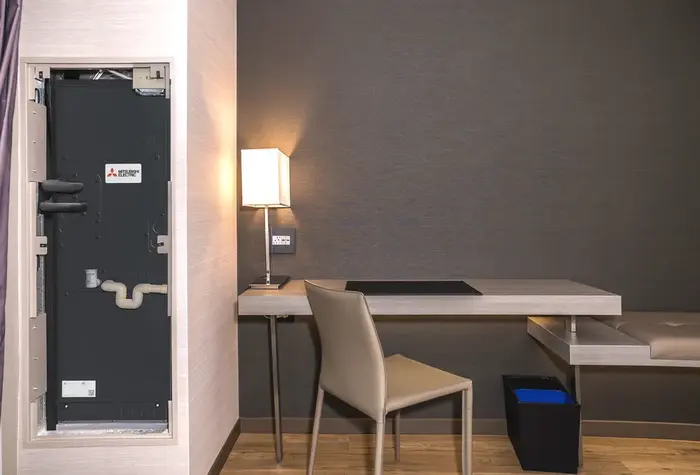
Here's how it works. Instead of a traditional refrigerant-based system where an outdoor condenser unit rejects heat to the outside air, a WSHP rejects and absorbs heat through a central water loop that runs through the building. The building operates a central chiller (and often a cooling tower) that conditions this loop water. Each unit or tenant suite contains a compact WSHP that connects to this loop — the unit looks and functions like a regular fan-coil system, but instead of air-to-refrigerant heat exchange, it uses water-to-refrigerant heat exchange.
What this means practically:
- No outdoor condenser on your balcony or rooftop. The WSHP units sit entirely indoors, typically in a closet or mechanical space within the unit.
- Efficient heat rejection in mixed-mode buildings. In a building where some units need cooling while others need heating simultaneously, the water loop allows heat to be transferred from the cooling zones to the heating zones.
- Building-managed infrastructure. The central plant equipment is the building's responsibility. The individual WSHP units that serve each tenant are typically the tenant's or owner's equipment.
WSHP brands Truficient installs and services in Uptown high-rises: Bosch, Daikin, and AAON are among the primary manufacturers of WSHP equipment used in Dallas's high-rise residential and commercial market.
For condo owners in Uptown towers: When your building's WSHP unit needs replacement, or when you want to upgrade to a higher-efficiency WSHP than your original equipment, Truficient has the experience to specify and install the right unit for your building's loop system.
For buildings with aging central plant equipment: If your building is considering upgrading or replacing the central chiller and loop infrastructure, Truficient can evaluate modern high-efficiency WSHP equipment from Bosch, Daikin, and AAON.
The Katy Trail Cooling Effect: What It Means for Sizing
For properties within two to three blocks of the Katy Trail, the greenway's evapotranspiration effect is a real variable in HVAC sizing — not a marketing footnote. The Texas Trees Foundation's research has documented that mature tree canopy can reduce ambient temperatures by up to 15°F compared to unshaded pavement.
This is not a reason to undersize a system — it is a reason to size accurately for the specific address rather than applying a heat island premium uniformly across all of Uptown.
Oncor Rebates in Uptown Dallas
Uptown Dallas is in Oncor Electric Delivery's service territory. Oncor offers rebates of up to $1,000 for qualifying high-efficiency HVAC installations.
See how Oncor rebates and Federal credits stack →
Read the full Dallas Urban Heat Island Research Report →
See how tree canopy and the Katy Trail affect HVAC sizing →
See Mitsubishi multi-zone systems for Dallas heat island zones →
Tools to Help You Decide
See Our Uptown Dallas Installations
Browse photos from real mini-split and heat pump installations in Uptown Dallas homes.
Get an Instant Estimate
Answer a few questions about your home and get a ballpark cost for your project.
Scan Your Home's Efficiency
Find out where your home is losing conditioned air and what upgrades make the most sense.