Lower Greenville Sells Premium. Every Detail Has to Hold Up.
Lower Greenville Avenue and the blocks feeding into it — Vickery Place, the M Streets east side, the Belmont corridor — have become one of Dallas's most concentrated zones of premium urban townhome development. Buyers in this pocket arrive with a clear picture of what $650,000 should feel like. They walk through slowly. They notice things.
One of the first things they'll notice is the rooftop deck. And one of the first things they'll notice on the rooftop deck is how loud the HVAC outdoor unit is — because in most townhome builds, that's exactly where it's sitting.
The rooftop isn't just a feature in Lower Greenville — it's the close. Buyers stand up there and imagine hosting. They picture evenings, they look at the skyline view, and they make decisions. Placing a loud, single-stage condenser 6 feet from that moment is one of the most preventable mistakes in Dallas townhome development.
Why the Standard Spec Fails the Premium Product
The issue isn't brand selection or installation quality — it's system architecture. A single air handler with motorized dampers trying to serve three floors from one thermostat is mismatched to what a tall, narrow urban townhome requires, regardless of how well it's installed.
Lower Greenville townhomes are typically built on tight lots, often west-facing, three stories with a rooftop deck above. The west-facing glass on the top floor collects heat through the afternoon. The roofline bakes. The first floor at grade, running against cool concrete, is a completely different thermal environment.
A single-zone system averaging those conditions means the top floor runs warm, the contractor makes adjustments, and the complaint cycle begins. That pattern shows up in reviews, in HOA conversations, and eventually in how the next project in the neighborhood is perceived.
The noise problem is different but just as real. A conventional single-stage condenser fires at full capacity on every cycle. On a premium rooftop deck — the feature that justified the price point — that compressor cycling on and off through an evening gathering isn't premium. It's a liability.
The System That Belongs Here
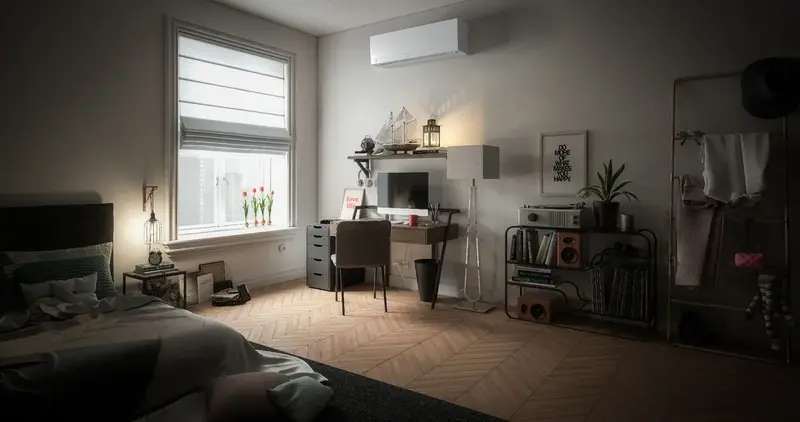
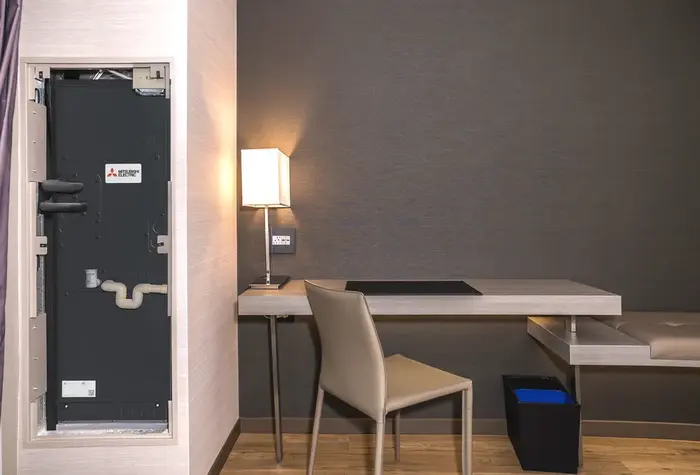
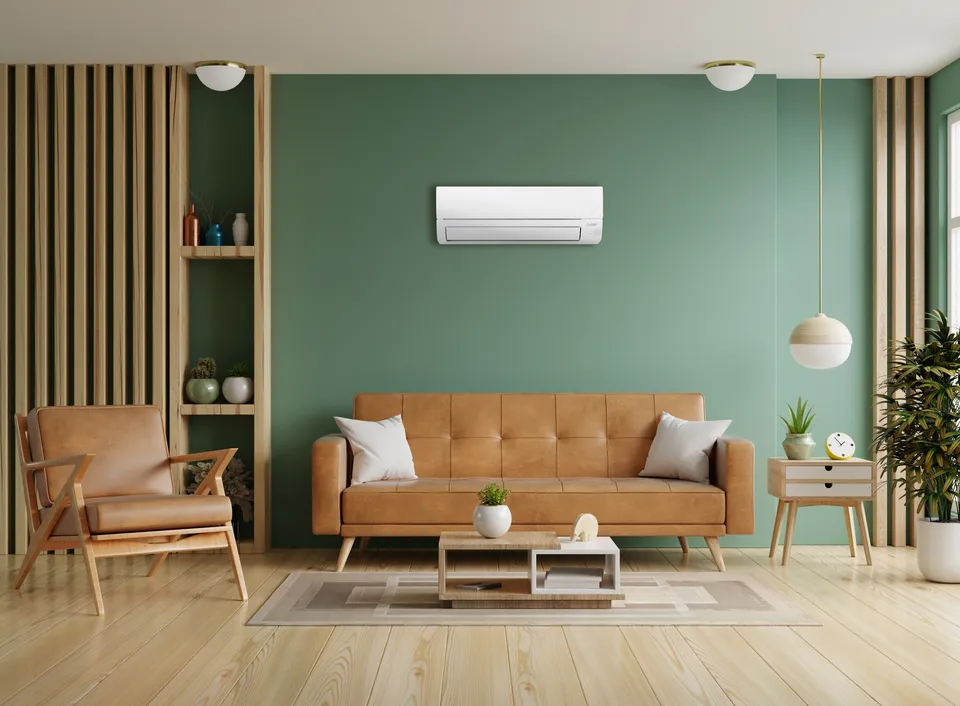
Multi-zone inverter heat pump systems are the correct engineering solution for this building type. One outdoor heat pump on the roof deck serves multiple indoor units — one per floor, ceiling-concealed ducted where aesthetics require clean ceilings, wall-mounted where it's a practical choice, ceiling cassette in open living spaces.
The outdoor unit disappears into the background. Mitsubishi and Daikin multi-zone compressors modulate continuously rather than cycling on and off. At partial load — which is the majority of operating time — these units run at sound levels that are essentially undetectable in normal outdoor conversation. Standing next to a Mitsubishi multi-zone unit during a rooftop dinner is a fundamentally different experience from standing next to a conventional condenser. Buyers feel that difference immediately, and it becomes part of how they describe the home to others.
Each floor is genuinely independent. The top floor handles its own afternoon solar load without pulling from the floors below. The middle floor — kitchen, entertaining, the highest-traffic zone — manages its own heat generation. Occupants set their own floor and get their own temperature, not a thermostat offset managed by dampers. That's a feature buyers in this market understand and value.
Heat rise works in your favor during cold weather. When lower floors call for heat in winter, warmth migrates naturally upward through the building. The middle floor benefits passively. The top floor — already the warmest point in the thermal stack — often doesn't need to run at all while lower floors are active. The outdoor unit serves the real aggregate load, not a worst-case calculation across all floors simultaneously. Buyers see lower heating bills. The system operates more efficiently than its specs suggest, because the building's physics are doing part of the work.
Modern heat pumps are built for this climate. Mitsubishi multi-zone systems deliver close to full heating capacity at temperatures approaching 0°F. Lower Greenville winters rarely challenge that threshold. This is genuinely ideal heat pump territory — efficient, reliable, and capable of handling the full seasonal range without gas backup. The same system that keeps the rooftop-adjacent bedroom cool in July handles a January cold snap cleanly.
Humidity management protects the finishes. Buyers in this price range are investing in hardwood floors, custom millwork, and premium paint. High humidity air that a conventional system fails to dehumidify properly — because it short-cycles when temperatures are mild — damages those materials over time and degrades the air quality that makes a space feel right. Inverter systems running at low speed through shoulder seasons continuously pull moisture from the air. The difference is in the air quality, and buyers feel it before they're consciously aware of it.
What the Spec Sheet Line Becomes in the Listing
"Fully zoned multi-floor climate system — each floor independently controlled, inverter-driven for superior humidity management, whisper-quiet rooftop unit."
That's a line that Lower Greenville buyers read differently than "central HVAC." It answers questions they've already been thinking about, in language they understand from lived experience. It's not technical jargon — it's a promise about the rooftop, about the comfort, about the energy bill, and about the finish quality over time.
Builders who spec this system put it in their marketing and mean it. It becomes a genuine differentiator in a market where the comparable on the next block has a similar kitchen, a similar layout, and a louder rooftop.
How We Support Your Project From Design Through Delivery
We know the Lower Greenville development corridor well. The lot configurations, the aesthetic priorities of buyers in this market, and the mechanical design challenges that come with narrow urban infill — we've navigated all of it.
We work best before framing is locked in. That means:
- Indoor unit placement that preserves ceiling height in the spaces that close deals — living floors, primary bedrooms
- Rooftop mechanical layout that integrates with the deck design rather than fighting it
- Line set routing that doesn't compromise structural elements or exterior finishes
- Load calculations per floor based on actual solar exposure and use patterns — not rules of thumb
From there: full installation, commissioning, and a buyer walk-through that leaves homeowners confident and curious rather than confused. Confident buyers generate fewer warranty calls and better referrals.
Start the Conversation Early
If you're developing in or around Lower Greenville — a small infill row, a larger community, a mixed-use project — we'd like to be part of your mechanical planning before the drawings go out for bid.
We'll give you a clear side-by-side: the cost difference between a conventional approach and a true multi-zone inverter system, and what that difference delivers in comfort, noise, energy efficiency, and buyer perception.
Call Truficient at 214-238-4349 or send your plans. Let's make the HVAC system a reason buyers choose your project — not a reason they ask for a discount.
Truficient Energy Solutions — Mitsubishi Diamond Dealer — Serving Lower Greenville, Vickery Place, M Streets, and the broader East Dallas urban development corridor.
Tools to Help You Decide
See Our Lower Greenville Installations
Browse photos from real mini-split and heat pump installations in Lower Greenville homes.
Get an Instant Estimate
Answer a few questions about your home and get a ballpark cost for your project.
Scan Your Home's Efficiency
Find out where your home is losing conditioned air and what upgrades make the most sense.