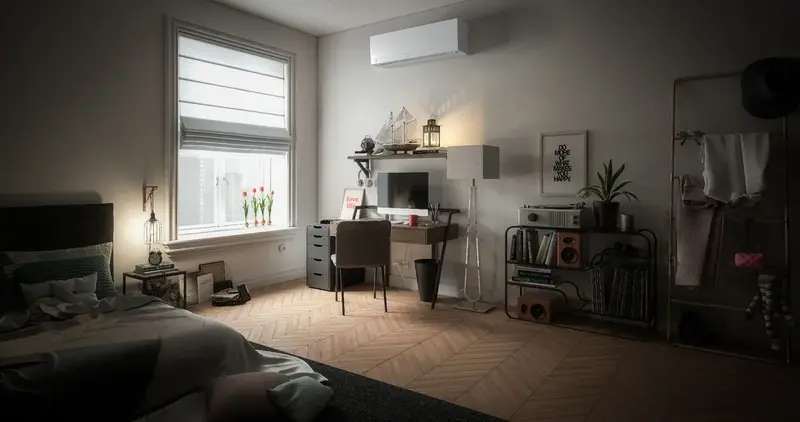
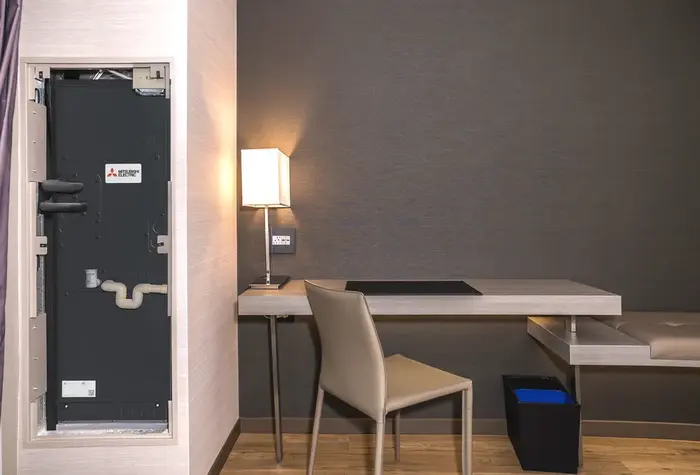
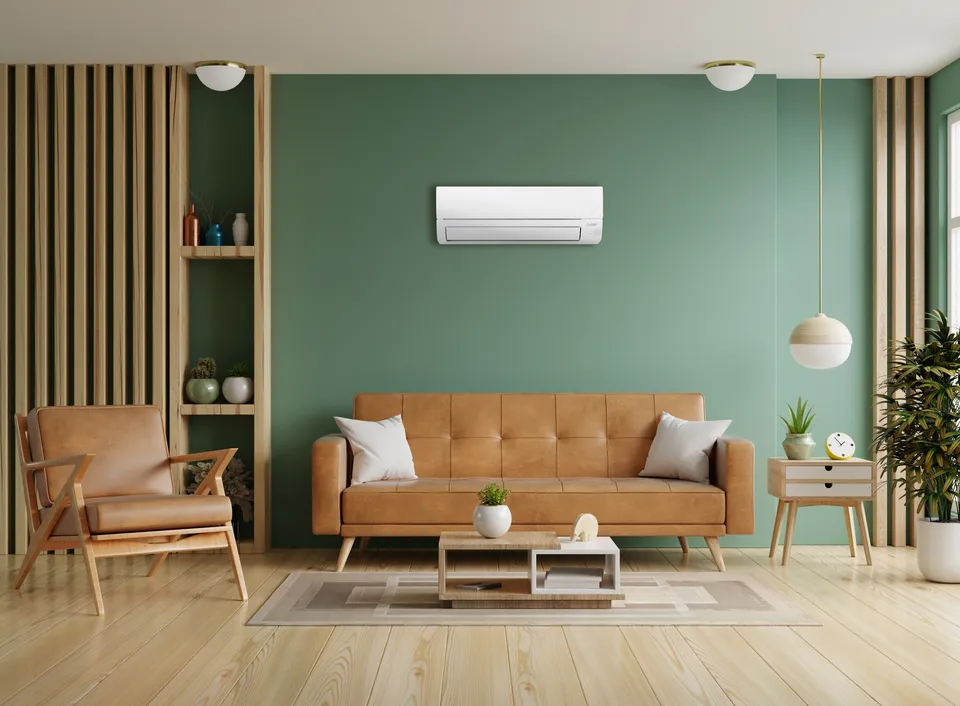
Mini Split with Heat — Year-Round Use Guide for Dallas
Mini-splits aren't just for cooling — they're heat pumps that heat AND cool from the same equipment. Here's what that means for Dallas year-round use. Call 214-238-4349 for project guidance.
Yes, Mini-Splits Heat (Most People Don't Realize This)
A common Dallas misconception is that mini-splits are "AC-only" equipment. This is wrong. Modern residential mini-splits are heat pumps — they heat as well as they cool, from the same outdoor unit, with no separate furnace or heating equipment required.
The mechanism is simple. A heat pump uses a reversing valve to switch the refrigerant flow direction. In cooling mode, the indoor coil acts as the evaporator (extracts heat from indoor air, rejects to outdoor coil). In heating mode, the valve reverses — indoor coil becomes the condenser (delivers heat to indoor air, extracts heat from outdoor air via the outdoor coil).
For Dallas applications, this means a single mini-split system handles:
- Summer cooling (May-October, the long season)
- Winter heating (November-March, the short and mild season)
- Shoulder-season conditioning (humidity removal in spring/fall when temperature is moderate)
No separate furnace. No gas service required. One equipment maintenance schedule. One install, year-round capability.
Why This Matters for Dallas Specifically
Three reasons heat pump capability is increasingly the preferred Dallas residential HVAC architecture:
1. Mild Dallas winters favor heat pump efficiency
Dallas heating season is short and mild. Average January high temperatures are in the mid-50s. Overnight lows below 25°F are rare. Modern Mitsubishi Hyper-Heat (H2i) outdoor units are rated for full heating capacity at 5°F outdoor and continued operation to -13°F — well below anything Dallas typically sees.
For the heating hours that actually occur in Dallas, a heat pump delivers coefficient-of-performance values above 3.0 — meaning 3 BTU of heat for every 1 BTU of electricity input. Combined with rising natural gas pricing volatility since 2021, the operating cost case favors heat pump for Dallas residential.
2. Multi-zone heat pump = independent room heating control
Multi-zone Mitsubishi MXZ systems give each indoor unit independent setpoint and schedule control — for both heating and cooling. The implications:
- Bedrooms can run cooler at night during heating season
- Living areas can run at comfort during occupied hours, setback when empty
- Sun-deprived rooms with chronic cold-spot issues get dedicated heating capacity at the right room
- Two-story homes don't have the "thermostat is in the warm room, bedroom never warms up" problem that single-thermostat HVAC produces
For chronic cold-room scenarios, see our Cold Room in Winter Dallas page.
3. Eliminates gas service requirement
Gas service standing charges, gas line maintenance, combustion-safety concerns, and gas bill volatility all disappear when you go all-electric heat pump. For homeowners simplifying their property, the heat pump removes a system entirely.
How Cold Can Mini-Splits Operate?
Different Mitsubishi (and competing brand) configurations have different cold-climate specs:
Standard MXZ multi-zone
- Full heating capacity at 17°F outdoor temperature
- Continued operation to -4°F at reduced capacity
- Suitable for typical Dallas winter conditions (rare to drop below 20°F)
Hyper-Heat (H2i) variants
- Full heating capacity at 5°F outdoor temperature
- Continued operation to -13°F at reduced capacity
- Overspec for Dallas, but provides headroom for the occasional cold snap and for sun-deprived rooms with elevated heating loads
For Dallas applications, Hyper-Heat is typically the right specification when:
- The home or zone is sun-deprived (north-facing primary bedroom, basement)
- The homeowner wants headroom for cold-snap insurance
- The building has unusual envelope conditions producing higher-than-typical heating load
- Federal 25C tax credit eligibility is part of the project (Hyper-Heat reaches the higher HSPF2 thresholds)
For brand alternatives across cold-climate spec, see our Best Mini Split Brand Dallas TX 2026 Ranking. For comparable cold-climate variants from other brands (LG LGRED°, Samsung WindFree Max Heat, Bosch Max Performance), browse our equipment catalogs.
What Heat Strips Are (And When You Need Them)
Heat strips are electric resistance heating elements installed in the air handler. They engage during extreme cold conditions when the heat pump alone can't maintain capacity. Common configurations:
Mitsubishi MXZ Hyper-Heat: Generally doesn't require backup heat strips for Dallas conditions. Hyper-Heat capacity at 5°F is sufficient for the rare extreme-cold Dallas overnight lows.
Standard MXZ (non-Hyper-Heat): May benefit from backup heat strips in homes with elevated heating loads or in cold-prone applications. Strips engage automatically when outdoor temperature drops below the configured threshold.
Dual-fuel configuration: Heat pump primary + small gas furnace backup. Used when the homeowner wants gas-furnace backup for extreme cold while capturing heat pump efficiency for typical conditions.
For most Dallas applications, Hyper-Heat without backup strips is sufficient. We diagnose during the site walk.
Defrost Cycles — What They Are and Why It's Normal
During heating mode in cold and humid conditions, ice can accumulate on the outdoor coil (heat pump pulls heat out of outdoor air, water vapor in the air condenses on the cold coil and freezes).
When ice accumulates, the system runs a defrost cycle:
- Reverses to cooling mode briefly
- Outdoor coil warms up, ice melts
- Indoor unit pauses heating (may blow cool/neutral air briefly)
- Cycle completes in 5-15 minutes
- System resumes heating
Defrost is normal operation — not a malfunction. If the indoor unit blows cool air briefly during a heating session, it's likely defrost. Wait 5-15 minutes for completion.
If defrost cycles are happening every 30-60 minutes (excessive frequency), that may indicate a refrigerant or airflow issue requiring service. For diagnostic context, see Mini Split Not Heating Winter Dallas.
Heat Pump vs Gas Furnace Operating Cost in Dallas
For a typical 2,500 sq ft Dallas home over a heating season:
- Gas furnace + AC pair: ~$280-$420 in winter heating + $1,800-$2,200 in summer cooling = $2,080-$2,620 annual HVAC operating cost
- Inverter heat pump (Mitsubishi P-Series): ~$250-$380 in winter heating + $1,000-$1,400 in summer cooling = $1,250-$1,780 annual HVAC operating cost
The heat pump operating cost advantage comes mostly from the cooling-season differential (inverter vs single-stage), not the heating side. But the heating side is roughly comparable to gas furnace at current Texas natural gas rates — heat pump doesn't lose money on heating in Dallas conditions.
For more on the gas-vs-electric heating decision, see Heat Pump vs Gas Furnace Dallas.
What This Means for Your HVAC Decision
If you're weighing replacement HVAC equipment in Dallas in 2026:
Mini-split (heat pump) replaces both your AC and your gas furnace. One install. One equipment maintenance schedule. Year-round capability.
You don't need a separate gas furnace. Most Dallas homes don't need backup heat strips either (Hyper-Heat handles typical conditions).
Eligible for federal 25C tax credit (up to $2,000 back on qualifying installations).
Operating cost beats single-stage central AC + gas furnace over the equipment service life.
For broader heat pump installation context, see Heat Pump Installation Dallas TX Service Hub. For mini-split-specific guidance, see Mini-Split Installation Dallas TX.
Adjacent Pages
- Heat Pump Installation Dallas TX Service Hub
- Heat Pump vs Gas Furnace Dallas
- Mini-Split Installation Dallas TX
- Cold Room in Winter Dallas
- Equipment Catalogs
Get a Heat Pump Quote
Call 214-238-4349 or request a quote online.
Truficient is a Mitsubishi Diamond Dealer with multi-brand installation capability. Year-round mini-split heat pump installation across Dallas residential and small-commercial.
Tools to Help You Decide
See Our Buyer Guide Installations
Browse photos from real mini-split and heat pump installations in Buyer Guide homes.
Get an Instant Estimate
Answer a few questions about your home and get a ballpark cost for your project.
Scan Your Home's Efficiency
Find out where your home is losing conditioned air and what upgrades make the most sense.