Hot Spots in Your Dallas Home — Why Some Rooms Won't Cool
The living room is 72°F and the primary bedroom is 79°F and the AC is running constantly. What's actually wrong, and what fixes work? → Request a Diagnostic or call 214-238-4349
The Six Reasons Dallas Homes Have Hot Rooms
Hot spots in a home — specific rooms that run noticeably warmer than the rest of the house, especially in summer — are one of the most common HVAC complaints we diagnose in Dallas. The cause is rarely a single broken component. It's usually a combination of design, construction, and equipment factors. The six patterns we see most often:
1. Duct Imbalance
The most common cause. Central HVAC systems distribute conditioned air through ducts and registers to each room. If the duct runs to one room are too long, too small, kinked, partially collapsed, or leaking into unconditioned attic space, that room gets less airflow than it needs. The system's total capacity is fine, but the distribution is broken.
How to spot it: The hot room's register produces noticeably less airflow than other registers in the home when the system is running. The room warms up gradually over the afternoon and never reaches setpoint even though the thermostat registers "cool."
The fix: Duct assessment to identify the weak run, sealing or replacement of the problematic duct, register damper adjustment, and verification of total static pressure. In older Dallas homes with retrofit ductwork (common in Oak Cliff, East Dallas, South Dallas, and Lake Highlands), selective duct replacement is often the scope.
2. Solar Load That the System Wasn't Sized For
West-facing rooms in Dallas get pounded with direct sun from about 2 PM until sunset during summer. A primary bedroom or office on the west side of the house picks up 20 to 40 percent more cooling load than an east-facing room of the same size. If the HVAC system was sized using basic square-footage calculations rather than Manual J load calculation, the west-facing rooms can be chronically under-served.
How to spot it: The hot room has large west-facing windows. The temperature delta grows from mid-afternoon through early evening, peaks around 6 to 7 PM, and improves after sunset.
The fix: Either upgrade the window (low-E, solar films), add solar shading (exterior shade, interior blinds), or add a dedicated zone for the problem room — a single-zone mini-split sized for the actual load, running independently from the central system.
3. Oversized Equipment That Short-Cycles
Counterintuitively, an HVAC system that's too big can produce hot spots. Oversized systems reach setpoint at the thermostat quickly, shut off, and don't run long enough to actually condition the more distant rooms. The room with the thermostat reads 72°F; the rest of the house runs warm.
How to spot it: The system cycles on and off frequently (multiple times per hour during peak heat), cooling runs are short (5 to 10 minutes), and the humidity in the house is high even though the AC is running.
The fix: If the equipment was recently installed and is genuinely oversized, this is harder to correct without replacement. If the equipment is a few years old and nearing replacement, the fix is to size correctly on the next replacement. In the interim, variable-speed inverter equipment modulates capacity and largely solves the short-cycling problem even when slightly oversized.
4. Inadequate Return Air
Central HVAC systems need return air paths to move conditioned air through the house. Many Dallas homes have a single central return, which works adequately for open floor plans but poorly for homes with closed bedroom doors. When a bedroom door is closed, the room's conditioned air can't return to the AC — pressure builds up, airflow stalls, and the room heats up.
How to spot it: The hot room is always warmer when the door is closed than when it's open. The problem is worse in primary bedrooms (which are usually kept closed at night) than in other rooms.
The fix: Add a return duct to the problem room, install jumper ducts above the door, undercut the door by an inch to allow return flow, or add a through-wall transfer grille. Relatively inexpensive fix, substantial comfort improvement.
5. Room Added to the House Without HVAC Integration
Dallas homes commonly have additions — converted garages, primary suite additions, bonus rooms, enclosed sunrooms — that were built after the original HVAC system. The original system wasn't sized to handle the added square footage, so the addition runs chronically warm (or cold in winter).
How to spot it: The hot room is identifiable as an addition (different ceiling height, different wall finish, different window style). The original system never worked well for the addition even when it was new.
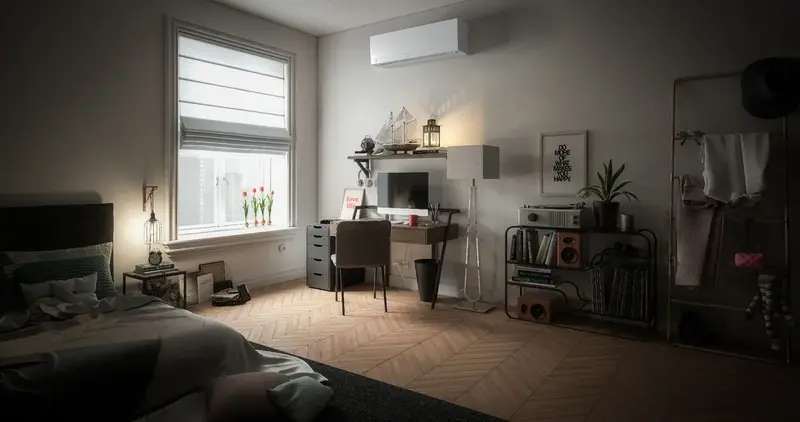
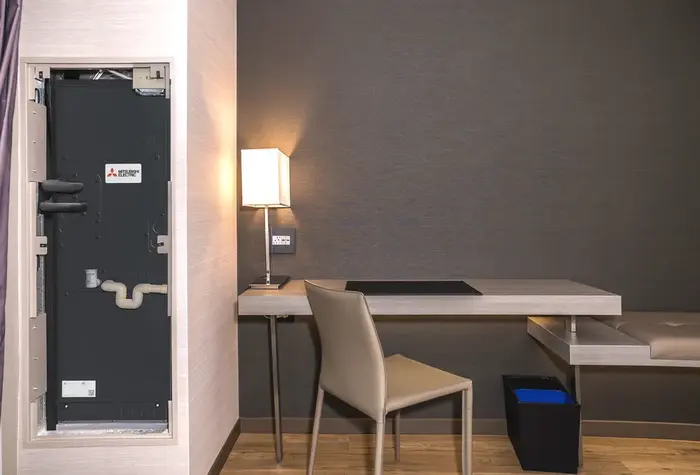
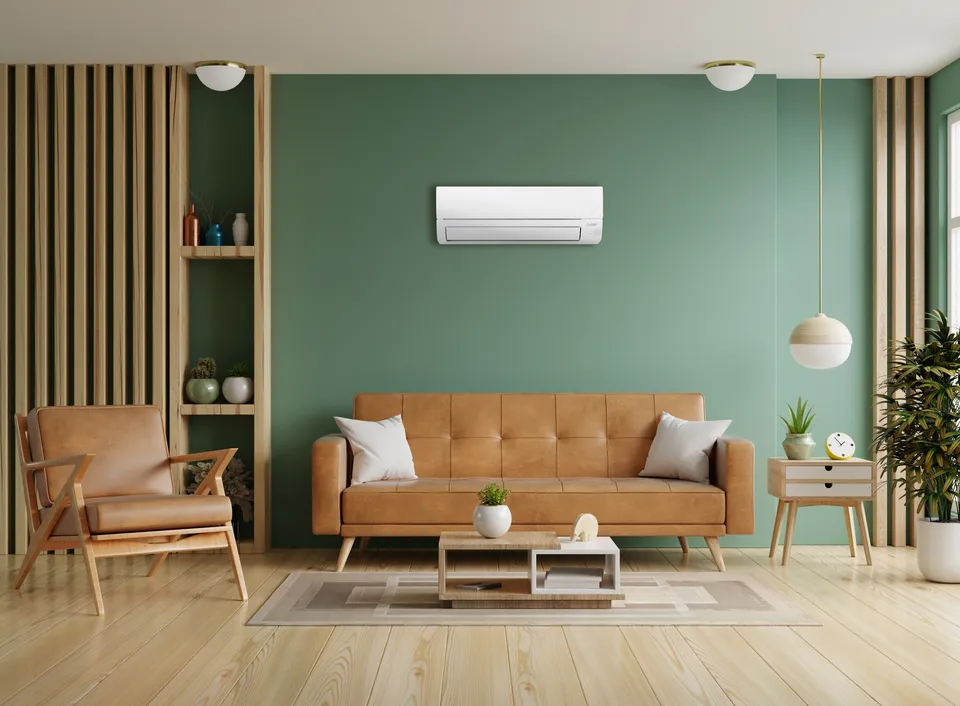
The fix: Add a zone. A single-zone Mitsubishi mini-split installed in the addition conditions that space independently from the central system. This is the cleanest, most reliable fix for addition-related hot spots — no modification to the central system needed.
6. Second-Floor Heat Stratification
Two-story Dallas homes — particularly 1990s and 2000s construction in Far North Dallas, Lake Highlands, Plano, and North Richardson — have a physics problem: hot air rises, cool air sinks, and the upstairs rooms run warmer than the downstairs rooms even when the HVAC system is sized correctly. Single-zone central systems with one thermostat (usually on the first floor) can't resolve this.
How to spot it: Every upstairs room runs warmer than every downstairs room. The pattern is consistent — not a single hot spot but a whole-floor imbalance.
The fix: Zoning. Either add a second zone to the existing central system (dampers + zone controller), or install a dedicated mini-split for the upstairs. Two-zone systems with independent thermostats for first and second floor resolve this problem definitively.
What a Diagnostic Actually Includes
When we come out for a hot-spot diagnostic, we don't just replace equipment or sell a new system. The diagnostic:
- Airflow measurement at every register in the home (what's actually flowing at each supply)
- Static pressure measurement at the air handler (is the system fighting excessive resistance)
- Duct inspection where accessible — attic runs, visible ductwork in basements or mechanical rooms
- Envelope evaluation of the hot rooms — window orientation, insulation, sun exposure
- Return air assessment — paths and sizing
- System sizing review — is the current equipment matched to the actual load
The output is a written assessment identifying the actual causes and the fixes that match them. Sometimes the answer is a $300 duct seal. Sometimes it's a $4,000 zone addition. Sometimes it's a $14,000 system replacement. We tell you honestly, with the reasoning, and let you decide.
What We Don't Do
We don't push a full system replacement when a duct seal or a jumper duct fixes the problem. We don't quote "add a bigger system" as a solution to hot spots — bigger systems rarely fix distribution problems and often make them worse. We don't add refrigerant to mask a leak or recommend a capacitor replacement to buy time when the underlying problem is duct distribution.
Related Resources
For understanding why Dallas homes run hot in the first place, see Dallas urban heat island HVAC solutions. For the ductless mini-split path when zoning is the right fix, see Mitsubishi mini-splits for Dallas homes and Mitsubishi whole-home zoning. For duct-specific fixes, see duct sealing and assessment in Dallas.
Get a Hot-Spot Diagnostic
Call 214-238-4349 or request a diagnostic online.
Truficient diagnoses hot-spot issues honestly and recommends the fix that matches the actual cause — not the most expensive option. Serving Dallas, Richardson, Plano, and the broader North Texas market.
Tools to Help You Decide
See Our Dallas Installations
Browse photos from real mini-split and heat pump installations in Dallas homes.
Get an Instant Estimate
Answer a few questions about your home and get a ballpark cost for your project.
Scan Your Home's Efficiency
Find out where your home is losing conditioned air and what upgrades make the most sense.