Uneven Temperatures Throughout Your Home? Here's the Dallas HVAC Fix
One room is hot, another is cold, and the thermostat reads 72°F in between. The fix is multi-zone HVAC — and here's how to choose the right configuration. Call 214-238-4349 or request an assessment.
Why Single-Thermostat HVAC Can't Satisfy a Whole House
The single-thermostat central HVAC system standard for the last 60 years has a fundamental architecture problem: it conditions the entire house to whatever temperature the thermostat is reading, and the thermostat can only be in one location. Every room more than ~15 feet from the thermostat is operating in a temperature it didn't ask for.
In Dallas homes, four conditions consistently produce uneven temperatures:
1. Solar exposure differential. Rooms on the west and south sides of the house receive significantly more solar gain than rooms on the north and east sides. A west-facing master bedroom in summer absorbs 4-6 degrees of additional load that a north-facing guest bedroom doesn't see. The single-zone system can't compensate.
2. Two-story stratification. Heat rises. Two-story Dallas homes consistently run upstairs warmer than downstairs in summer (and the opposite in winter). The first-floor thermostat reads 72°F; the upstairs primary bedroom is at 78°F.
3. Long-run ductwork loss. The supply register at the end of the longest duct run delivers significantly less conditioned air than the register closest to the air handler. A 3,000 sq ft ranch with a master bedroom at the back of the house frequently has 15-20% less airflow at the master register than at the kitchen register near the air handler.
4. Room-specific equipment loads. A home office with a workstation, monitors, and lighting generates 600-1,000 BTU/hr of additional heat. A finished bonus room above a hot garage gains heat through the floor. A converted sleeping porch with single-pane windows has higher infiltration. The central system can't address these per-room differences.
The fix is multi-zone HVAC. Independent setpoint per zone, system response per zone, capacity delivered to the rooms that actually need it.
The Three Multi-Zone Configurations That Work in Dallas
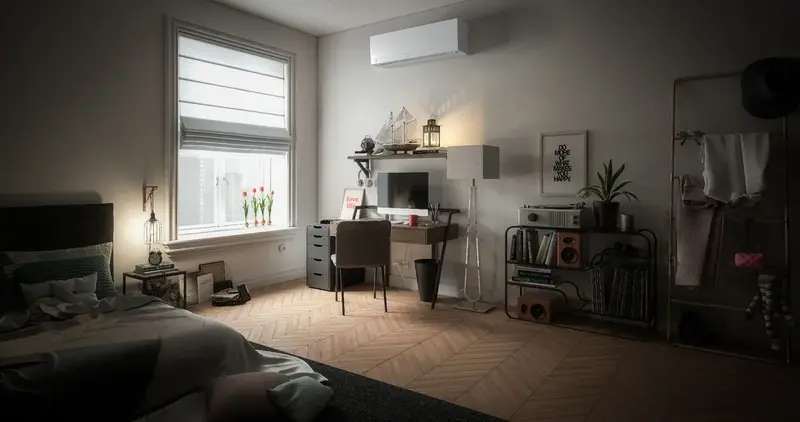
Option 1 — Multi-zone ductless mini-split. The cleanest solution architecturally. A Mitsubishi MXZ multi-zone outdoor unit serves three to eight indoor units, each with independent setpoint, fan speed, and schedule. Each room runs its own thermostat (or app control). For Dallas homes with the most chronic comfort complaints — historic homes with degraded retrofit ductwork, two-story homes with stratification, sun-exposed master bedrooms — multi-zone ductless is typically the right answer. More on mini-split installation →
Option 2 — Two-system design. For larger Dallas homes (3,500+ sq ft), splitting the central system into two independent systems — one for the first floor, one for the second — eliminates the upstairs/downstairs stratification problem. Each system has its own thermostat and is right-sized to its respective floor's load. Most cost-effective approach when existing ductwork is in good condition and can be split into two distribution networks.
Option 3 — Zoned ducted with motorized dampers. Existing single-system ducted HVAC retrofitted with motorized dampers in the supply trunks plus a zone control panel. Each "zone" gets its own thermostat that controls a damper in the supply ductwork. Lower up-front cost than dual systems or mini-splits. Limitations: shares one outdoor unit's capacity (so simultaneous high-demand zones can outpace the equipment), requires existing ductwork in good condition, and the sensor-and-damper architecture has more moving parts than the alternatives.
How to Choose Between the Three
Existing ductwork condition: If ductwork is degraded (25%+ conditioned air loss to attic, common in pre-1990 housing), zoned ducted (Option 3) doesn't work — you'd be zoning a leaky system. Multi-zone ductless or two-system is the answer.
Architectural constraints: Historic homes with original plaster walls (Option 3 ductwork modifications usually don't fit) push toward multi-zone ductless.
Home size: Under 2,500 sq ft = multi-zone ductless usually fits cleanest. 2,500-3,500 sq ft = either multi-zone ductless or zoned ducted. 3,500+ sq ft = two-system design competitive.
Equipment age and replacement timing: If the existing central system is at end of life anyway, multi-zone ductless or two-system replacement is the cleanest economic decision (you're spending replacement budget on the right architecture, not band-aiding the wrong one).
Operating cost priority: Multi-zone ductless inverter equipment has the lowest operating cost per square foot conditioned. Two-system inverter heat pump is comparable. Zoned ducted retrofit on existing single-stage equipment has the lowest up-front cost but the highest operating cost.
What an Assessment Looks Like
When you call us about uneven temperatures, the assessment covers:
1. Per-room temperature measurement. We measure indoor temperature in each room across the home — at multiple times of day if needed — to map the actual differential.
2. Per-room load calculation (Manual J). We calculate the cooling and heating load for each room based on solar exposure, window area, internal gains, infiltration. The math identifies which rooms are under-served by the current system.
3. Ductwork inspection. We measure ductwork condition, identify air leakage, and quantify per-room airflow delivery.
4. Equipment condition assessment. Existing equipment age, refrigerant type, operating capacity vs rated capacity. Equipment near end-of-life shifts the recommendation toward replacement-with-zoning rather than retrofit-zoning.
5. Configuration recommendation. Based on the diagnostic, we recommend multi-zone ductless, two-system design, or zoned ducted retrofit — with operating cost projections for each option.
The deliverable is a written assessment with specific configuration recommendations and quotes.
Equipment Options for Multi-Zone Dallas Applications
Mitsubishi MXZ multi-zone outdoor units — three- to eight-zone configurations covering most Dallas residential.
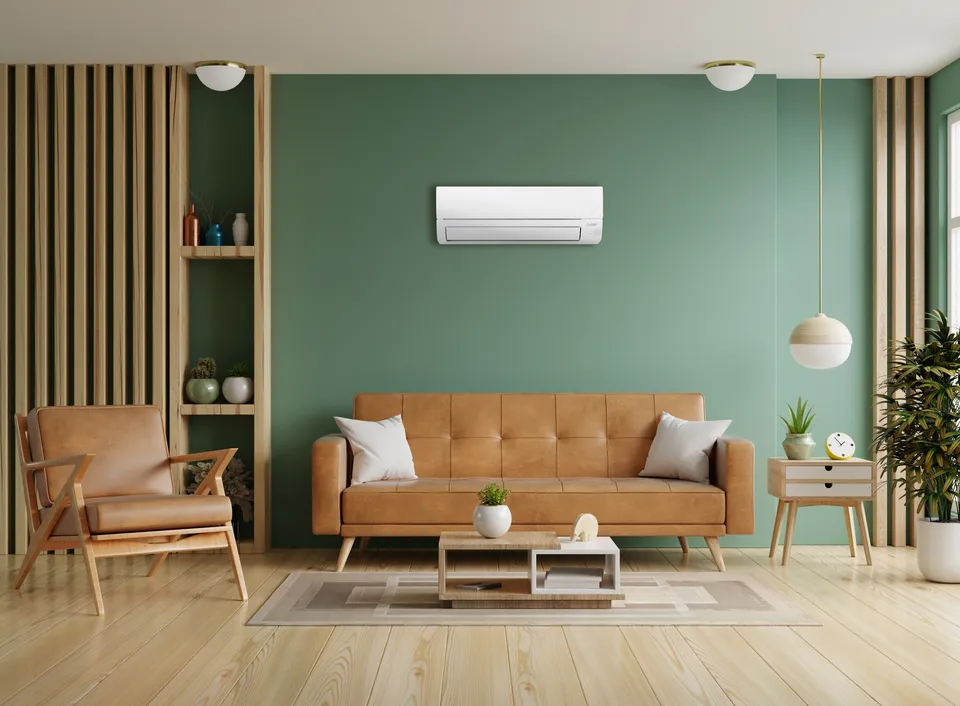
Mitsubishi MSZ-FS wall-mount indoor units — slim profile, 19 dB(A) whisper mode, white finish.
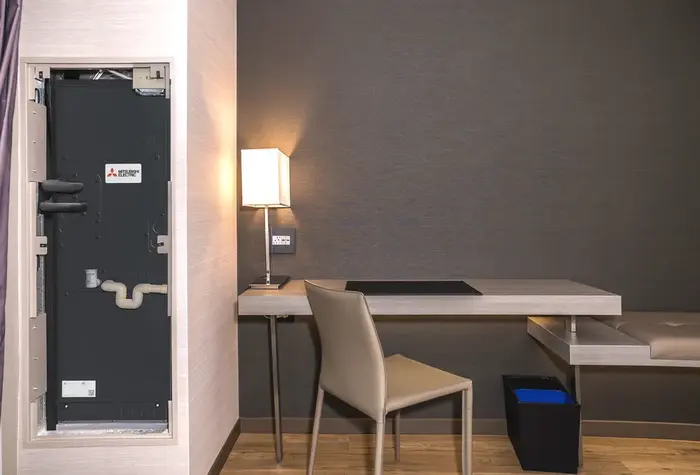
Mitsubishi SLZ ceiling cassette — recessed flush-mount for renovated rooms with ceiling clearance.
Mitsubishi MFZ floor-mount — for rooms with high windows or limited wall space.
Mitsubishi SVZ-KP slim-duct — concealed-duct alternative for homes where short ductwork chases work.
Mitsubishi P-Series ducted heat pumps — for two-system design with new ducted equipment per floor.
For non-Mitsubishi options, see our Daikin Aurora Multi-Zone, LG Multi F MAX, or Bosch Climate 5000 multi-zone pages.
When Uneven Temperatures Signal a Bigger Problem
Sometimes the uneven-temperature complaint is a symptom of broader HVAC underperformance rather than a zoning issue specifically. If you're also seeing:
- Indoor humidity 60%+ and air feels heavy — see High Humidity Home HVAC Fix
- Summer electric bills $500+ on a typical home — see High Electric Bill Summer Dallas
- System short-cycles every 8-15 minutes — likely oversized; right-sizing is the fix
- Allergy or respiratory symptoms worse indoors — IAQ issues that multi-zone alone won't fix
The right intervention often addresses multiple problems at once. Manual J load calculation plus equipment right-sizing plus multi-zone configuration is the combined fix that pays back in operating cost, comfort, and IAQ simultaneously.
Adjacent Pages
- Mini-Split Installation Dallas TX — service hub
- Heat Pump Installation Dallas TX — service hub
- High Humidity Home HVAC Fix — humidity-side diagnostic
- High Electric Bill Summer Dallas — operating cost diagnostic
- DFW Humidity Hub — comprehensive humidity context
Get an Uneven Temperature Assessment
If you have rooms in your home that never reach setpoint while others overcool, or two-story stratification you've been living with, an assessment identifies the specific intervention.
Call 214-238-4349 or request an assessment online.
Truficient is a Mitsubishi Diamond Dealer with multi-zone HVAC design expertise across Dallas.
Tools to Help You Decide
See Our Dallas (Uneven Temperatures) Installations
Browse photos from real mini-split and heat pump installations in Dallas (Uneven Temperatures) homes.
Get an Instant Estimate
Answer a few questions about your home and get a ballpark cost for your project.
Scan Your Home's Efficiency
Find out where your home is losing conditioned air and what upgrades make the most sense.