Multi-Zone Mini-Split Systems in Uptown and Oak Lawn, Dallas
Ready to design the right system for your space? → Request a Quote or call 214-238-4349
Why Uptown Calls for a Different HVAC Approach
Uptown Dallas and Oak Lawn represent the city's most diverse residential HVAC environment. Within a few blocks of McKinney Avenue and the Katy Trail corridor, you have glass-and-steel mid-rise condos where individual units are served by packaged terminal equipment, three-story infill townhomes where the original builder spec'd a single air handler for a floor plan that stacks 2,400 square feet vertically, pre-war Oak Lawn masonry cottages where ductwork was retrofit into a structure not designed for it, and new construction luxury townhomes where buyers are investing $1.2 million in a home and expecting a conditioning system that performs accordingly.
A wall-mount mini-split in a single problem room is the right answer in some of these situations. In Uptown and Oak Lawn, it's frequently not the whole answer. The residential density, the building types, and the price point of the properties here make multi-zone systems — systems that condition multiple spaces from a single outdoor unit, using a mix of indoor unit types selected for each application — the more appropriate and more common installation.
Truficient designs multi-zone systems for Uptown and Oak Lawn properties using Mitsubishi's full indoor unit lineup: concealed ceiling ducted units, ceiling cassettes, and wall-mount units, matched to the specific requirements of each space in the building. The right indoor unit type varies by room, by ceiling construction, by architectural character, and by the owner's preference. Getting it right requires treating the system as a design exercise, not just a mechanical specification.
Multi-Zone System Architecture: One Outdoor Unit, Multiple Options
A Mitsubishi multi-zone system connects one outdoor condensing unit to multiple independent indoor air handlers. Each handler has its own temperature setpoint, its own operating schedule, and its own response to actual conditions in that zone. The master suite on the third floor of a townhome doesn't have to fight the thermostat with the home office on the second floor. The living room and kitchen open plan doesn't have to run all night to make one bedroom comfortable.
Multi-zone outdoor units are available in configurations from two zones up to eight. Most Uptown townhomes fall in the three-to-five zone range. A three-story townhome might run one zone per floor, or a more granular layout with the open-plan living area on one zone, the primary suite on another, and the secondary bedrooms combined on a third.
The outdoor unit placement in Uptown and Oak Lawn properties requires some thought. Rooftop placement is common on townhomes where the mechanical infrastructure is already roof-based. Ground-level placement in a private rear patio or in a dedicated mechanical area along the alley is the alternative for properties where roof access is complicated. Both approaches work — they just require different line-set routing designs.
Concealed Ceiling Ducted Units: The Invisible Option
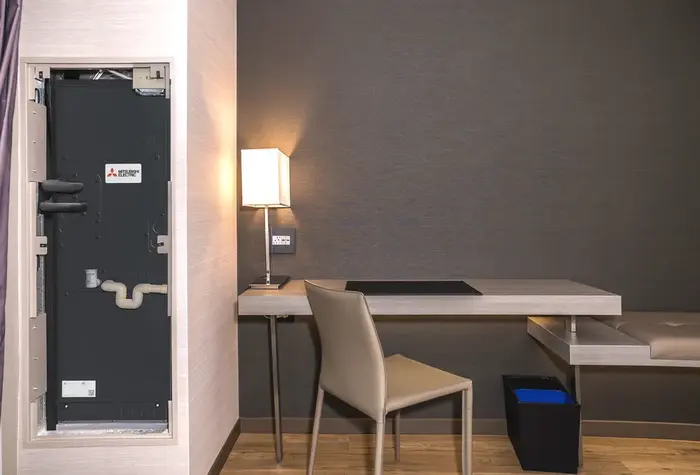
For Uptown and Oak Lawn spaces where the indoor unit needs to disappear entirely — a formal dining room in a renovated Oak Lawn Tudor, an open-plan living area in a high-finish Uptown townhome, a master suite where wall surfaces are fully utilized — Mitsubishi's concealed ceiling ducted units (the SEZ series) are the right selection.
These units live entirely within the ceiling cavity. There is no visible equipment in the room at all — only a low-profile supply register and a return air grille, which can be positioned and specified to match the interior design intent. The unit handles the conditioning; the room never knows it's there.
Concealed ducted units connect to short duct runs within the ceiling plenum — typically two to four supply registers distributed across the zone rather than a single discharge point. This distributes conditioned air more evenly across larger spaces and avoids the concentrated airflow that a wall-mount unit directs into one area of the room.
In Uptown townhomes with spray foam insulation and tight ceiling construction, the concealed ducted approach requires coordination at the design stage to ensure adequate plenum depth and access for maintenance. Truficient assesses ceiling cavity conditions as part of the site evaluation for any concealed ducted installation. When the ceiling construction allows it, this is the indoor unit type that disappears most completely and performs most elegantly.
Ceiling Cassettes: High Performance, Minimal Visual Footprint
For spaces where the ceiling construction doesn't support a fully concealed unit, or where a four-way air distribution pattern serves the zone better than a ducted approach, Mitsubishi's ceiling cassette units are the appropriate choice.
A standard four-way ceiling cassette mounts flush with the ceiling surface, with a grille visible from below that distributes conditioned air in four directions simultaneously. The unit conditions the zone evenly without the directionality of a wall-mount unit and without the duct-routing requirement of a fully concealed system. In an Uptown living room with 10-foot ceilings and an open floor plan, a single appropriately-sized cassette handles the space efficiently and leaves all four wall surfaces available.
Cassettes are also the right choice for Uptown properties with concrete slab ceiling construction between floors — situations where running refrigerant lines and duct work through the ceiling to install a concealed unit isn't feasible. The cassette's refrigerant and condensate connections run through the ceiling opening at the unit location; there's no duct routing to manage.
For Oak Lawn historic properties with original high ceilings and architectural plasterwork, a ceiling cassette positioned centrally in a room can be specified in a low-profile finish that reads as a ceiling feature rather than an HVAC appliance. The visual impact is significantly less than a wall-mount unit, and the performance across a large room is better.
Wall-Mount Units: The Right Answer for Specific Spaces
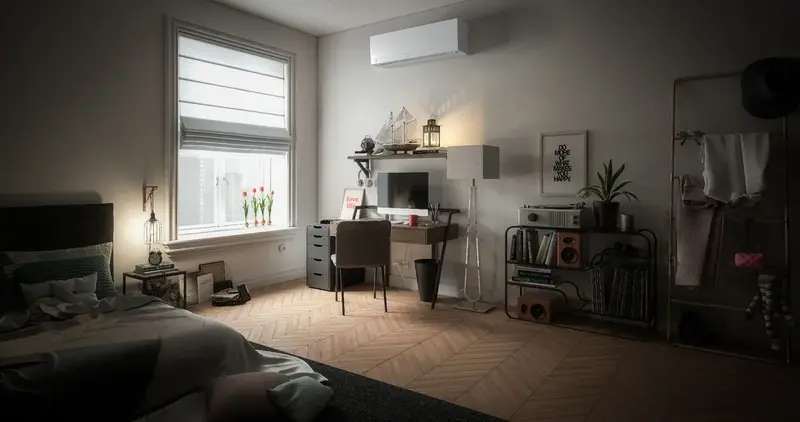
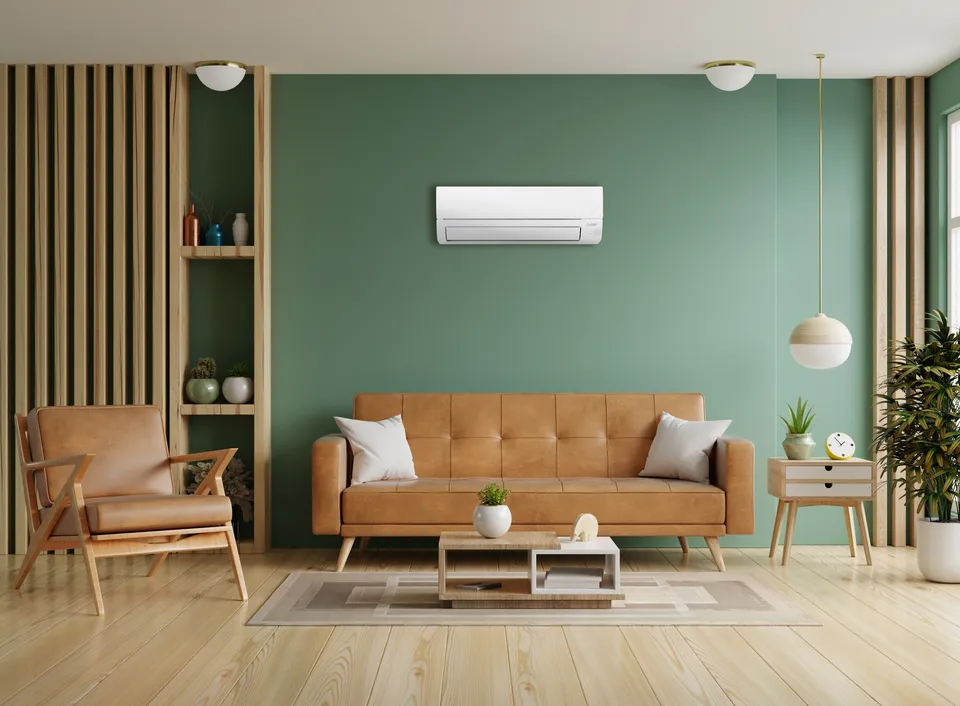
Wall-mount Mitsubishi units — the MSZ series — remain the right choice for specific applications within an Uptown or Oak Lawn multi-zone system. A dedicated home office with standard 9-foot ceilings and a simple layout. A secondary bedroom where ceiling construction doesn't support a cassette. A garage-level utility or gym space that needs conditioning independently of the main living floors.
Wall-mount units within a multi-zone system share the outdoor unit with the rest of the building's zones, so they operate on the same inverter platform — the same efficiency, the same R32 refrigerant, the same Wi-Fi control integration. They're simply the right indoor unit form factor for the spaces where they're installed.
A thoughtfully designed Uptown townhome system might use a concealed ducted unit in the living room and dining area, ceiling cassettes in the master suite and second bedroom, and a wall-mount in the home office — each indoor unit type selected for what that space calls for, all connected to a single multi-zone outdoor unit on the rooftop.
Inverter Performance in Uptown's Built Environment
Uptown Dallas sits in a built environment that creates thermal loads that suburban neighborhoods don't experience at the same intensity. Dense glass and steel structures re-radiate absorbed solar heat into the surrounding air throughout the evening. Western and southern exposures in Uptown towers and townhomes face sustained afternoon sun loading from late spring through October. High-rise neighbors can create localized shading patterns that shift when and where solar gain enters a unit.
Mitsubishi's inverter compressor modulates output continuously to match these variable loads rather than cycling on at full capacity. In a southwest-facing Uptown townhome running a properly sized multi-zone system, the individual zone handling the afternoon sun exposure modulates upward to match the load while the north-facing bedroom zone modulates down — the outdoor unit adjusts total output to the combined demand across all active zones simultaneously.
The humidity control advantage is equally relevant in Uptown. Dense urban environments tend to retain heat and humidity. A system that runs continuously at modulated capacity removes moisture from the air more effectively than equipment that cycles on and off rapidly. For Uptown properties where the building envelope is tight and interior humidity matters — for flooring, for artwork, for comfort — this is a meaningful operational difference.
Serving Uptown and Oak Lawn
Truficient designs and installs multi-zone Mitsubishi systems throughout Uptown and Oak Lawn — the McKinney Avenue and Cole Avenue townhome corridors, the Turtle Creek and Reverchon Park area, the Cedar Springs and Oak Lawn Avenue residential streets, and the infill townhome blocks near the Design District. Primary service ZIP codes: 75204 and 75219.
For commercial spaces in the adjacent Design District, see our commercial HVAC Design District page. For the Lower Greenville and M Streets residential area to the east, see our Lower Greenville mini-split installation page.
Start With a Site Assessment
Multi-zone system design requires seeing the building. Ceiling construction, floor plan layout, outdoor unit placement options, and the mix of indoor unit types that serves each space well can't be determined without a walkthrough.
Call 214-238-4349 to schedule a design consultation, or request a quote online and we'll set up a site visit.
Truficient is a Mitsubishi Diamond Dealer serving Uptown, Oak Lawn, and the Dallas urban core.
Tools to Help You Decide
See Our Uptown Installations
Browse photos from real mini-split and heat pump installations in Uptown homes.
Get an Instant Estimate
Answer a few questions about your home and get a ballpark cost for your project.
Scan Your Home's Efficiency
Find out where your home is losing conditioned air and what upgrades make the most sense.