Richardson Heat Island HVAC: Suburban Cooling for Telecom Corridor Heat Load
Richardson's Telecom Corridor and commercial office density generate suburban heat island effects that bleed into residential neighborhoods. Aging ranch homes with original AC can't handle sustained high-ambient operation. Mitsubishi inverter systems handle commercial heat load efficiently. Truficient is registered in Richardson. → Request a Free Evaluation or call 214-238-4349
The Richardson Suburban Heat Island Profile
Richardson is Truficient's registered business area and a Dallas outer-ring suburb transformed by the Telecom Corridor—one of the highest concentrations of technology companies, data centers, and office park development in Texas. The residential neighborhoods that surround this commercial density face a unique urban heat island challenge: suburban heat island driven by commercial infrastructure.
Why Richardson is different:
- Dense commercial corridors along US-75 (Central Expressway), Belt Line Road, and Campbell Road continuously radiate heat
- Office parks, data centers, and tech company campuses operate HVAC systems 24/7 (unlike residential neighborhoods that have nighttime relief)
- Rooftop cooling towers, exhaust vents, and ground-level condensers on 500+ office buildings create persistent heat plume
- Residential neighborhoods (aged 1960s–1980s single-story brick ranch homes) sit immediately adjacent to these commercial heat sources
- University of Texas at Dallas (UTD) campus development and research corridor add additional commercial heat load
Real heat conditions in Richardson:
- Summer peak ambient: 104–110°F (vs. 102°F at DFW Airport; 2–8°F hotter than non-corridor suburbs)
- Commercial heat plume effect: 3–5°F localized elevation in neighborhoods within 0.5–1.5 miles of major office corridors
- Telecom Corridor 24/7 operation: Nighttime ambient in Richardson (near offices) stays elevated (82–86°F) vs. non-corridor suburbs (75–78°F)
- Typical AC runtime in Richardson: 14–18 hours/day (more than non-corridor suburbs)
- Average summer electric bill: $180–$280/month
This is commercial heat bleed into residential neighborhoods.
Why Richardson's Housing Stock Amplifies Commercial Heat Island Effects
1960s–1980s Single-Story Brick Ranch Dominance
Richardson's residential neighborhoods are characterized by:
- Brick ranch homes: 1,200–1,600 sq ft, single-story, built 1960s–1980s
- Well-maintained properties: Owner-occupied, pride of ownership visible
- Aging original HVAC systems: Most homes have 20–30-year-old single-stage central AC units
- Modest lot sizes: 0.25–0.35 acres typical; dense neighborhood spacing (homes 30–40 feet apart)
Vulnerabilities in commercial heat island:
- Single-stage compressors can't modulate in sustained high-ambient operation
- Brick exterior absorbs and re-radiates heat (85–90% solar absorption)
- Modest tree canopy (25–35% shade coverage; many original landscape trees now 40–50 years old)
- Single-pane or early dual-pane windows (poor thermal performance vs. modern ENERGY STAR units)
The Telecom Corridor Heat Corridor Effect
Richardson's major commercial corridors—US-75 (Central Expressway), Belt Line Road, and Campbell Road—are defined by:
Data centers + office parks operating 24/7:
- HVAC systems running continuously (not just 8 a.m.–6 p.m. business hours)
- Rooftop cooling towers releasing heated exhaust air
- Ground-level condensers on 100+ commercial units
- Server farms and data processing facilities generating massive internal heat loads
Impact on adjacent residential:
- Homes within 0.5 miles of major commercial corridors sit in a persistent heat plume
- Nighttime ambient temperature stays 5–8°F higher than non-corridor suburbs
- "Cool-down relief" that typical residential neighborhoods experience at night (9 p.m.–7 a.m.) never fully materializes
- AC runtime extends into night hours; system never cycles off for extended rest
Specific Richardson residential areas affected:
- North of Belt Line Rd: Homes near office parks along Campbell Rd, Waterview Pkwy
- Adjacent to US-75 corridor: Residential blocks east/west of Central Expressway from Campbell to Beltline
- UTD perimeter neighborhoods: Homes near University of Texas at Dallas campus and research corridor
Limited Escape from Commercial Heat
Unlike dense urban neighborhoods (East Dallas, Pleasant Grove) where residents can find relief 2–3 miles away, Richardson's suburban structure concentrates the problem:
- Commercial corridors are linear and extensive (US-75 runs north-south; Belt Line runs east-west)
- Heat plume extends 0.5–1.5 miles perpendicular to corridors
- Residential neighborhoods can't escape without leaving the city
What This Means for Your Richardson Cooling Comfort and Efficiency
Single-Stage Systems Fail in Sustained High-Ambient Conditions
Richardson homeowners typically have 20–30-year-old single-stage AC systems that were sized for 1960s–1980s commercial heat loads. These systems struggle in modern commercial heat island conditions:
Single-stage compressor operation:
- Runs at 100% capacity when outdoor ambient is above setpoint
- In 108°F+ ambient (commercial heat plume), compressor runs at 100% capacity for 14+ hours/day
- Cannot reduce capacity; cycles on/off, creating thermal stress on aging components
- Loses efficiency every year (refrigerant loss, compressor wear)
Your cooling failure risk is highest in peak summer (July–August), when commercial operations run at maximum (data centers ramping capacity for heat load, offices operating normally).
Electric Bills Reflect the Commercial Heat Load
- Richardson homeowners report $180–$280/month summer electric bills
- Peak demand hours (3–7 p.m., June–Sept) are when commercial offices and data centers are at maximum load
- Your AC is competing for capacity against 500+ commercial units generating heat
The Inverter Mini-Split Solution for Richardson's Suburban Heat Island
Mitsubishi inverter-driven mini-splits are engineered for sustained, high-ambient temperature operation—exactly what Richardson commercial heat corridor residents experience.
How Inverter Modulation Handles Sustained High-Ambient Operation
Single-stage system:
- Compressor at 100% or off.
- In 108°F+ ambient, stays at 100% capacity for extended periods.
- Thermal stress = component failure risk (compressor burnout, capacitor failure common in July–August)
Mitsubishi inverter mini-split:
- Compressor modulates 10–100% capacity continuously.
- In 108°F+ ambient, compressor runs at 65–80% capacity, smoothly tracking demand.
- No on/off cycling = no thermal stress.
- Maintains rated capacity even in 115°F+ ambient (where traditional systems degrade 15–20%)
- Component lifespan extends significantly.
Performance Gains in Richardson Context
- Energy savings: 30–40% reduction vs. your current single-stage system
- Summer electric bill: $110–$170/month (vs. $180–$280 current) = $70–$110/month savings
- Reliability: No July–August compressor burnout risk (common in single-stage systems)
- Quiet operation: 22–25 dB outdoor unit (respects compact lot spacing in Richardson neighborhoods)
- Payback period: 4–6 years on equipment + installation cost
System Design for Richardson Ranch Homes
Most Richardson homes are 1,200–1,600 sq ft with straightforward layouts:
Typical setup:
- Single 2-ton Mitsubishi inverter system (MSZ-FH24NA or similar)
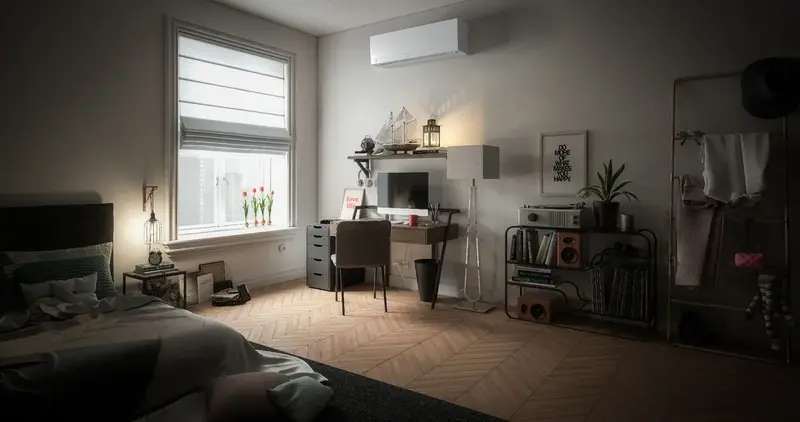
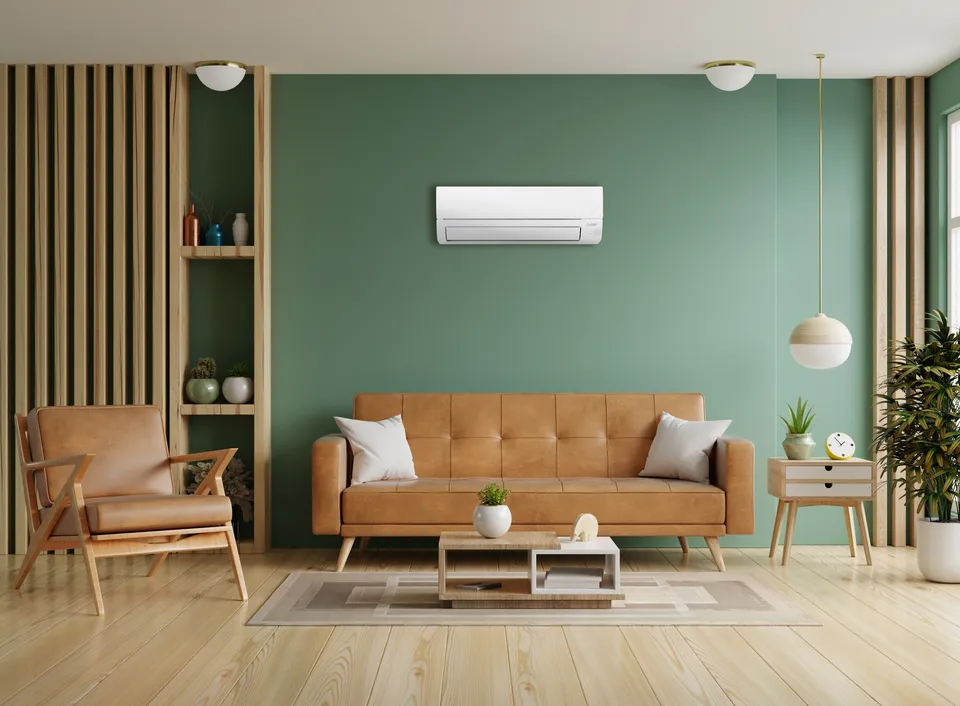
- Wall-mounted indoor unit in main living area or hallway
- One outdoor condenser on ground level or side yard
- Direct air delivery to living spaces (no attic ductwork)
Why this works:
- 1-zone system is simple to manage
- Modulating compressor handles variable load as commercial heat bleed fluctuates
- Quiet operation respects residential neighborhoods
- 20+ year lifespan with minimal maintenance
Detailed System Recommendations for Richardson Homes
Standard 1,200–1,400 sq ft Ranch (East/West Exposure)
System: Mitsubishi MSZ-FH24NA (2 ton) single-zone or MSZ-FH18NA (1.5 ton) for smaller load
- Capacity: 2 ton handles 1,200–1,400 sq ft at high ambient (108–110°F sustained operation)
- Inverter advantage: Modulates 10–100%; no over-sizing in variable load conditions
- Installation: Wall mount in living room or hallway; outdoor unit on ground level or side yard
- Efficiency: SEER2 22+
Why this configuration:
- Richardson ranch homes have open living layouts; single zone sufficient
- 2-ton inverter system uses less energy than traditional 2.5–3 ton single-stage system
- Future-proof for climate change (systems rated for 115°F+ ambient)
Larger Homes or Complex Layouts (1,500–1,800 sq ft)
System: Mitsubishi MXZ-2C24NAHZ (2-zone VRF) + MSZ-FH18NA + MSZ-FH24NA
- Zone 1: Master bedroom (primary sleeping area; typically most sensitive to temperature swings)
- Zone 2: Living areas + kitchen (primary daytime load)
- Zoning benefit: Bedroom can cool independently when family is sleeping; living areas handle afternoon heat gain
- Efficiency: SEER2 23+
- Commercial heat bleed advantage: Zones respond independently to fluctuating commercial heat plume
Real Numbers: Costs, Savings, and Richardson Service Advantage
Equipment and Installation
- Single-zone 2-ton system: $3,000–$4,500 (equipment + installation)
- Dual-zone VRF system: $4,000–$6,000
- Typical Richardson home: Single-zone = $3,000–$4,500 installed
Energy Savings in Richardson Context
- Current aging single-stage system: $180–$280/month (peak summer)
- Mitsubishi inverter mini-split: $110–$170/month (peak summer)
- Monthly savings: $70–$110
- Annual savings: $840–$1,320
- Payback period: 4–5 years on equipment cost
- System lifespan: 20+ years
Mitsubishi 12-Year Diamond Dealer Warranty
- Parts + labor: 12 years full coverage
- Truficient registered in Richardson: Fast, local service response
- Peace of mind: No surprise repair bills during peak summer
Texas Heat Pump Rebate
- Up to $2,500 for replacing electric AC with inverter heat pump mini-split
- All Mitsubishi systems qualify: SEER2 18+
- Truficient handles all paperwork
Long-Term Richardson ROI
- Equipment + installation (after rebates): $1,000–$2,500
- Annual energy savings: $1,000–$1,500
- Avoided repair/replacement costs (old systems failing in July–August): $500–$1,500/year
- Payback period: 2–3 years
- System lifespan: 20+ years
Why Richardson Residents Choose Mitsubishi Inverter Cooling
- Handles sustained high-ambient operation. Commercial heat corridor requires compressor that modulates, not cycles
- Energy savings are real. 30–40% reduction vs. single-stage systems = visible electric bill drops
- Reliability. No July–August compressor burnout (common failure point for aging single-stage systems)
- Truficient is registered here. Local service, fast response, warranty support
- Quiet operation. Respects Richardson neighborhood density
- 12-year warranty. Diamond Dealer coverage gives homeowners long-term protection
- Future-proof for climate change. Systems rated for 115°F+ ambient
Ready to Escape Richardson's Commercial Heat Corridor?
Richardson homeowners sit in a suburban heat island driven by Telecom Corridor commercial operations. Single-stage AC systems sized 20–30 years ago can't handle sustained high-ambient operation. Your electric bills and summer repair emergencies prove it.
Mitsubishi inverter systems are engineered for exactly this problem: sustained 108–110°F+ ambient, 24/7 commercial heat bleed, and reliable all-day operation.
Your next step:
- Request a Free Home Evaluation — we'll assess your heat exposure from commercial corridors and design the right system
- Call 214-238-4349 for a free consultation
Truficient is registered in Richardson. We handle all rebates, financing, warranty registration, and local service.
Explore Heat Island Solutions Across North Dallas and Richardson
- Dallas urban heat island overview → Dallas Urban Heat Island HVAC Solutions
- Mitsubishi inverter technology explained → Mitsubishi Mini-Split Cooling Dallas
- High-ambient cooling systems → High-Ambient HVAC Systems Dallas
Final CTA
Truficient Energy Solutions | Mitsubishi Diamond Dealer
📞 214-238-4349 📍 Registered Business Area: Richardson, TX
Request a Free Evaluation | View System Options | Local Service & Warranty
Tools to Help You Decide
See Our Richardson Installations
Browse photos from real mini-split and heat pump installations in Richardson homes.
Get an Instant Estimate
Answer a few questions about your home and get a ballpark cost for your project.
Scan Your Home's Efficiency
Find out where your home is losing conditioned air and what upgrades make the most sense.