Ductless HVAC in the Bishop Arts District, Dallas
Get a ductless HVAC quote → Request an Assessment or call 214-238-4349
What "Ductless" Actually Means — and Why Bishop Arts Is Built for It
Ductless HVAC is a simple concept: the system moves conditioned air directly into the space being served, without any ductwork connecting the equipment to the room. An outdoor compressor unit connects to one or more indoor air handlers via a small refrigerant line set — roughly the diameter of a garden hose — that passes through a 3-inch penetration in the wall. That's the entire connection between outdoor and indoor equipment.
For the Bishop Arts District, this matters because most of the residential and commercial building stock predates central air conditioning entirely. The bungalows on Edgefield and Willomet Avenues, the 1920s commercial buildings along Bishop Avenue and Davis Street, the converted storefronts between W. 7th Street and Colorado Boulevard — none of these were designed to carry ductwork. Ductless systems work with the buildings that exist, not against them.
A ductless system is also not a single product. The term covers a wide range of configurations: single-zone and multi-zone systems, wall-mount and ceiling-recessed indoor units, heat pumps and cooling-only models, residential and commercial equipment grades. Understanding the options is the first step toward choosing the right one.
The Range of Ductless Systems Available in Bishop Arts
Single-zone systems. One outdoor unit paired with one indoor air handler. Handles a specific room or space — a studio apartment above a Bishop Avenue retail space, a converted carriage house behind a Winnetka Heights bungalow, a home office addition that's never been connected to the main system. Single-zone installations are typically the fastest and most straightforward.
Multi-zone systems. One outdoor unit connected to multiple indoor air handlers, each serving a different space with independent temperature control. For a whole-home ductless installation in a Bishop Arts bungalow, a typical configuration might be two or three zones: main living area, bedroom wing, and a bonus room or sunporch. Each zone runs on its own schedule and its own thermostat setting.
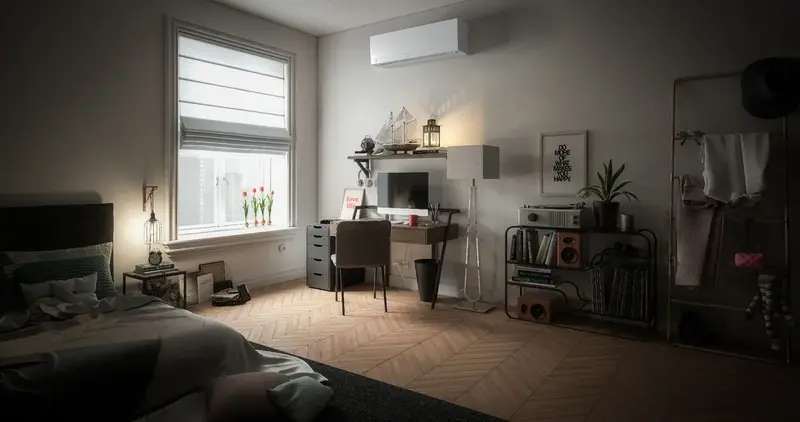
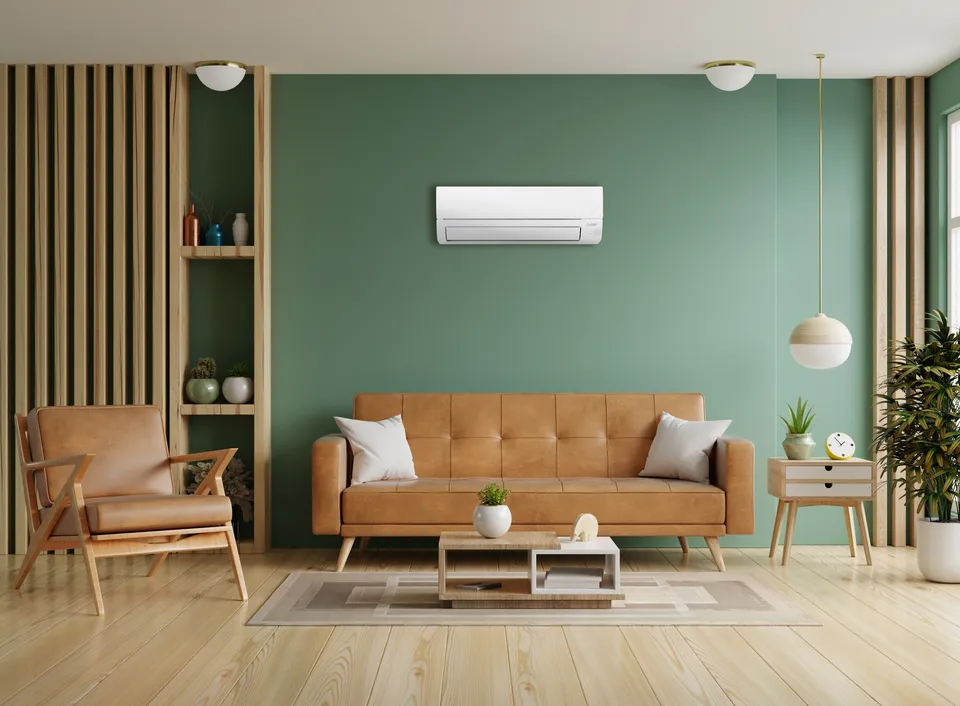
Wall-mount units. The standard ductless indoor unit — mounts high on the wall and delivers conditioned air downward. Works well in most residential applications and is the lowest-cost indoor unit option. Modern units from Mitsubishi, Daikin, and Gree are significantly more compact and quieter than earlier generations.
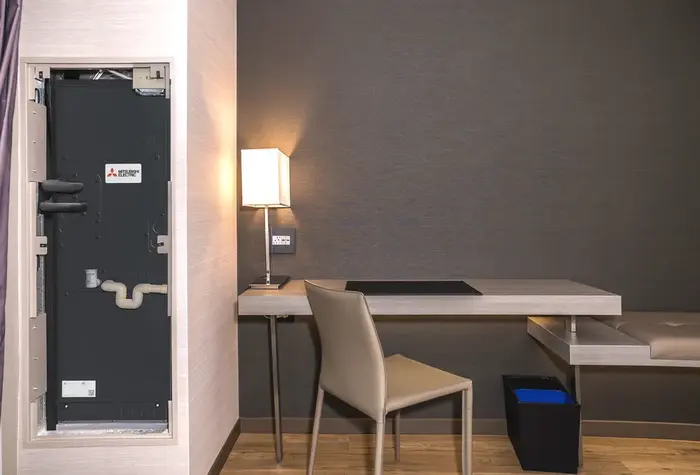
Ceiling cassette units. A recessed ceiling-mount unit that delivers conditioned air in four directions from a flush grille. Well-suited to Bishop Arts commercial spaces — boutique retail, small restaurants, gallery spaces, and studios — where a wall-mount unit would be intrusive and a ceiling installation is cleaner aesthetically. Also appropriate in historic residential applications where high ceilings and architectural detail make a wall unit visually unwelcome.
Floor-console units. Mounts low on the wall or sits at floor level, directing airflow upward. Useful in spaces where wall-mount installation is impractical — rooms with limited high-wall space, installations where the furniture layout conflicts with a high-mounted unit, or spaces where heating performance at floor level is the priority.
Three Brands: Mitsubishi, Daikin, and Gree
The ductless market has consolidated around a few brands that consistently perform well. Truficient installs systems from Mitsubishi, Daikin, and Gree, and the right choice depends on what the application requires.
Mitsubishi is the brand Truficient is certified on as a Diamond Dealer. The M-Series and P-Series residential/light commercial lines are the standard against which other ductless equipment is measured — exceptionally quiet indoor units, reliable inverter compressors, strong cold-weather heating performance under the Hyper-Heat designation, and a 12-year parts and compressor warranty through an authorized dealer. For Bishop Arts homeowners and business owners making a significant investment in a building they care about, Mitsubishi is the low-risk choice.
Daikin is the world's largest HVAC manufacturer by revenue and offers a full range of ductless systems at pricing that typically runs below Mitsubishi at equivalent specifications. Daikin's inverter technology is well-proven, their multi-zone systems are well-regarded in the industry, and their commercial mini-split lineup — including ceiling cassette options — is particularly competitive. For a Bishop Arts business owner installing ductless in a retail or studio space where budget matters and performance requirements are straightforward, Daikin is a strong choice.
Gree is the world's largest HVAC manufacturer by unit volume. Their own-brand ductless systems are available at lower price points than Mitsubishi or Daikin and offer solid inverter performance with a reasonable warranty. For residential applications in Bishop Arts where the budget is a real constraint and the homeowner wants a genuine heat pump system rather than window units, Gree delivers real value.
Ductless for Bishop Arts Light Commercial Applications
The commercial strip running along Bishop Avenue between Davis Street and W. 8th Street — the boutiques, restaurants, galleries, coffee shops, and studios that define the Bishop Arts District's character — is made up of buildings that are almost uniformly pre-air conditioning construction. These are masonry and wood-frame commercial buildings from the 1920s through 1940s, many of them with open floor plans and no obvious pathway for ductwork.
For these businesses, ductless is the practical standard. A single ceiling cassette unit can condition a 400 to 800 square foot retail space without any visible ductwork and without modifying the building structure. A small restaurant or café along Davis Street can run a two-zone system — dining room and kitchen — from a single outdoor unit on the roof or rear of the building.
Several scenarios come up consistently in the Bishop Arts commercial corridor:
Boutique retail spaces. Small storefronts of 300 to 600 square feet need cooling that doesn't consume floor space, doesn't disrupt a carefully designed retail environment, and doesn't require a major build-out. A ceiling cassette mini-split installs in a day and is nearly invisible in operation.
Art galleries and studios. Consistent temperature and humidity matter for art storage and display. Ductless systems running inverter compressors are better at maintaining steady temperature and humidity than conventional equipment that cycles on and off at full capacity.
Small offices above retail. The upper-floor spaces above Bishop Arts shops — converted to small offices, studios, or residential units — often have no HVAC connection to the ground floor commercial space. A single-zone ductless installation serves each unit independently.
Event spaces and community venues. The Bishop Arts Theatre and the adjacent event spaces along the district's core blocks require flexible conditioning for variable occupancy loads. Multi-zone ductless handles this well — zones can be run independently based on which spaces are occupied.
How Ductless Handles Dallas's Demanding Summer
Bishop Arts sits in a climate that demands serious cooling performance. Outdoor temperatures above 95°F are common from July through September, and sustained periods above 100°F occur in most years. The buildings along Bishop Avenue — masonry construction that absorbs heat through the day and radiates it into the evening — add to the challenge.
Inverter compressors in Mitsubishi, Daikin, and Gree equipment modulate output continuously, matching the actual cooling load rather than cycling on and off at fixed capacity. In a Bishop Arts building with high thermal mass and solar gain from south- or west-facing walls, that modulation means the system can sustain lower capacity through the night as the building slowly releases its daytime heat load, rather than blasting on and off inefficiently.
Serving Bishop Arts and North Oak Cliff
Truficient installs ductless systems throughout the Bishop Arts area — the Winnetka Heights Historic District, the Bishop Avenue commercial corridor, the Davis Street and Colorado Boulevard blocks, and the surrounding streets from the Methodist Dallas Medical Center to the W. 7th Street corridor. Primary service ZIP is 75208.
For homeowners specifically focused on mini-split installation, our Bishop Arts mini-split installation page covers the installation process in detail. For the broader Oak Cliff residential HVAC picture, see our Oak Cliff HVAC overview. We also serve the adjacent South & West Oak Cliff neighborhood.
Get a Ductless Assessment for Your Bishop Arts Property
Whether you're a homeowner in Winnetka Heights, a business owner on Bishop Avenue, or a property owner managing a mixed-use building in the district, a site assessment is the starting point.
Call 214-238-4349 to talk through your situation, or request an assessment online.
Truficient is a Mitsubishi Diamond Dealer serving the Bishop Arts District and North Oak Cliff.
Tools to Help You Decide
See Our Bishop Arts District Installations
Browse photos from real mini-split and heat pump installations in Bishop Arts District homes.
Get an Instant Estimate
Answer a few questions about your home and get a ballpark cost for your project.
Scan Your Home's Efficiency
Find out where your home is losing conditioned air and what upgrades make the most sense.