Residential HVAC in South & West Oak Cliff, Dallas
Talk through your options → Request an Assessment or call 214-238-4349
South Oak Cliff's Homes Are in a Replacement Cycle — And Energy Costs Are Making It Urgent
The residential blocks of South and West Oak Cliff — running south from Jefferson Boulevard through the Kiest Park neighborhood, past the Stevens Park Golf Course corridor, and into the Westwood and Sunset Hill areas approaching Duncanville Road — are predominantly 1950s through 1970s construction. These are ranch-style homes and split-levels on generous lots, built during the postwar expansion of Dallas proper into what was then suburban Oak Cliff.
The HVAC equipment that was installed in these homes during the 1980s and 1990s replacements is now at or past the end of its practical service life. And in the last ten years, the financial argument for replacing aging inefficient systems has grown substantially stronger — because the cost of running them has grown substantially more expensive.
According to the U.S. Energy Information Administration (EIA), average residential electricity prices in Texas have risen over 40 percent in the last decade. Natural gas costs for residential customers have been even more volatile: following Winter Storm Uri in 2021 and subsequent infrastructure investments, residential gas bills in Dallas-area homes have been significantly higher than the prior decade's baseline, with some years nearly doubling what the same home paid pre-2020. The EIA's Residential Energy Consumption Survey consistently shows American households now spending an average of over $2,200 per year on energy — a figure that is higher in hot-climate states like Texas where cooling loads are six months long.
In a South Oak Cliff home running a 20-year-old single-stage system through a Dallas summer, a meaningful share of that annual energy cost is being wasted by equipment that runs at full capacity regardless of actual load, loses conditioned air through aging ductwork, and hasn't been designed for efficiency in decades.
What Inverter Technology Actually Changes in a Ranch Home
The houses along Kiest Boulevard, the blocks surrounding Kiest Park itself, and the quieter streets between Hampton Road and Westmoreland Avenue represent some of the most typical South Oak Cliff housing — 1,400 to 2,000 square feet, accessible attic space, and central duct systems that were viable when installed but are now leaking and undersized for the equipment that's been added over the years.
The core problem with conventional single-stage equipment in these homes isn't that it fails to cool — it's that it's thermally inefficient in ways that translate directly to monthly electricity bills. Single-stage compressors run at 100% capacity whenever they're on. They blast on, cool the space to setpoint, shut off, and repeat. In a Dallas summer where outdoor temperatures are sustained above 95°F for weeks at a time, that full-capacity cycling runs up electricity consumption in a way that's visible on the meter.
Mitsubishi's inverter heat pumps — the equipment Truficient installs as a Diamond Dealer — work differently at the mechanical level. The compressor adjusts its output continuously, matching actual load rather than cycling on and off at full power. On a 98°F afternoon in a Kiest Park ranch house, the system runs at moderate continuous output rather than slamming on and off. The result is lower electricity consumption over the course of the day, better humidity control because the system runs longer at reduced capacity and extracts moisture consistently, and noticeably steadier indoor temperatures.
For South Oak Cliff homes still running gas furnaces for heating, a heat pump replacement also eliminates the gas equipment entirely — one system, one utility, and no gas bill for heat. Given the volatility in residential gas prices since 2021, removing that variable is a meaningful long-term benefit.
The New Refrigerant Landscape: R454B in Ducted Systems
If your existing system runs R410A — which is the case for virtually every residential central system installed between 2010 and 2024 — the refrigerant landscape has changed significantly. Under EPA AIM Act regulations effective in 2025, new residential equipment can no longer use R410A. Any replacement system installed today uses a next-generation refrigerant.
For ducted central systems of the type common in South Oak Cliff ranch homes, the replacement refrigerant in most major brands is R454B, also known by Carrier's trade name Puron Advance. R454B has a global warming potential (GWP) of approximately 466 — about 78% lower than R410A's GWP of 2,088. It also performs slightly better as a refrigerant fluid in terms of heat transfer efficiency, which contributes to modestly improved efficiency ratings in equipment that uses it.
R454B is classified as A2L — mildly flammable under specific conditions, but not meaningfully different from how R410A is handled in practice for residential installations. Equipment designed for R454B incorporates the required safety provisions. For a South Oak Cliff homeowner replacing a central system, the practical takeaway is straightforward: new equipment uses a better refrigerant, and any system installed today won't face the service complications that will increasingly affect aging R410A systems as that refrigerant phases out.
Ductwork in South Oak Cliff: A Major Variable in the Right Recommendation
The condition of your existing ductwork is one of the most important inputs to the right HVAC recommendation for a South Oak Cliff home — and it's something that can't be assessed accurately from a photo or a phone conversation.
Ranch homes from the 1950s and 1960s often have original metal duct systems that are still structurally intact but have developed significant leakage at joints and connections over 60-plus years. The sections running through unconditioned attic space — where summer temperatures routinely exceed 130°F — absorb heat that the system then has to work harder to overcome. Duct sealing alongside equipment replacement can meaningfully improve the performance of a new inverter system and is often the highest-value improvement available in these homes.
Homes where the ductwork was replaced during an 1980s or 1990s renovation often have flex duct installations. Flex duct has a shorter service life than rigid metal and is more prone to sagging, kinking, and disconnecting from registers over time. A South Oak Cliff home with deteriorated flex duct may need partial duct replacement as part of a major system upgrade.
Truficient evaluates the duct system as part of every assessment. The equipment recommendation follows what the duct system can actually support.
When Ductless Makes More Sense
Not every South Oak Cliff home has ductwork worth keeping. Some properties have duct systems so deteriorated that replacement would be required before new central equipment could function properly — at which point the total cost often competes with a ductless alternative. Others have additions — enclosed patios, converted garages, detached workshops on larger lots near the Westmoreland or Hampton corridors — that were never connected to the main system and have been running window units for years.
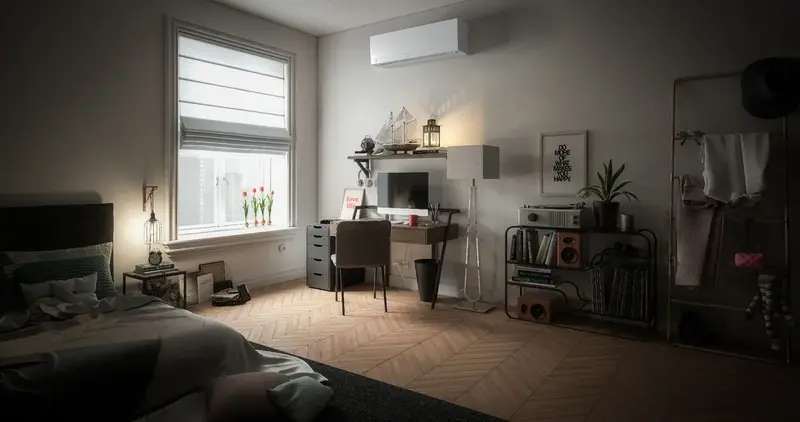
In these situations, a ductless mini-split bypasses the duct question entirely. For a single problem space, a one-zone installation can be done in a day. For a whole-home ductless replacement, a multi-zone system serves the entire house from a single outdoor unit, with each indoor air handler controlled independently.
Serving South & West Oak Cliff
Truficient serves residential HVAC customers throughout the 75211 ZIP code — Kiest Park, Stevens Park Golf Course corridor, Sunset Hill, Westwood, and the areas approaching Duncanville Road. We also serve the adjacent Bishop Arts and North Oak Cliff neighborhood and the neighboring Cockrell Hill community.
For homeowners specifically considering ductless options, our Oak Cliff mini-split installation page covers that in detail. For a full picture of heat pump replacement options, see our Oak Cliff heat pump replacement overview.
Schedule an Assessment for Your South Oak Cliff Home
If your system is more than 12 years old, if your energy bills have been climbing without explanation, or if some rooms are never comfortable regardless of what the thermostat says, a site assessment is the right starting point.
Call 214-238-4349 to talk through your situation, or request an assessment online.
Truficient is a Mitsubishi Diamond Dealer serving South & West Oak Cliff and the Dallas core market.
Tools to Help You Decide
See Our South Oak Cliff Installations
Browse photos from real mini-split and heat pump installations in South Oak Cliff homes.
Get an Instant Estimate
Answer a few questions about your home and get a ballpark cost for your project.
Scan Your Home's Efficiency
Find out where your home is losing conditioned air and what upgrades make the most sense.