Why Is My Upstairs So Hot in Summer? Dallas Fix Guide
The recurring Dallas two-story home problem: downstairs holds setpoint, upstairs runs 5–10°F warmer all summer. The causes are knowable, the fixes are real, and most homes can be brought into temperature balance for under $10,000. → Request a Diagnostic Visit or call 214-238-4349
The Problem: Downstairs Cool, Upstairs Hot
You set the thermostat to 72°F. The downstairs holds at 72°F. The upstairs sits at 78–82°F. The bedrooms at the top of the stairs are uncomfortable for sleep. The AC runs constantly without ever satisfying the upstairs demand.
This is one of the most common HVAC complaints in Dallas — particularly for two-story homes built between 1970 and 2010, regardless of neighborhood, regardless of equipment age, regardless of how recently the ductwork was inspected. The pattern is so consistent that there's a specific set of causes that almost always explain it.
The Five Things That Cause Upstairs Heat in Dallas
Cause 1: Attic Ductwork Heat Gain
Almost every two-story Dallas home has supply ductwork running through unconditioned attic space to reach the upstairs rooms. On a 100°F+ Dallas July afternoon, attic temperatures reach 130–150°F. Even with intact R-6 fiberglass duct insulation, a 50-foot supply run loses 8–12°F of capacity by the time the air reaches the upstairs supply registers.
So your AC produces 55°F supply air at the air handler. By the time that air reaches the upstairs bedrooms, it's 63–65°F — well above what's needed to actually cool a room with significant heat gain from the roof.
The fix: Spray-foam attic insulation that brings the attic into the conditioned envelope, reducing duct heat gain dramatically. Or, eliminate the attic ductwork entirely by going to a ductless system for the upstairs.
Cause 2: Duct Leakage
Beyond heat gain through duct walls, most Dallas ductwork leaks. Tape seals at trunk-branch joints fail. Connections at registers come loose. Insulation peels away. Flexible duct sections get crushed by attic activity. A duct pressure test on a typical 1970s–1990s Dallas two-story home returns 25–40% leakage — meaning 25–40% of the conditioned air the AC produces gets dumped into the attic instead of delivered to the upstairs rooms that need it.
This is not a minor inefficiency — it's a primary cause of the upstairs-hot problem. The downstairs gets adequately cooled because supply runs to the downstairs are short. The upstairs runs hot because the long supply runs are leaking before the air arrives.
The fix: Targeted duct sealing using mastic at every trunk-branch junction, replacing failed flexible sections, and re-securing register boots. Often dramatically improves upstairs performance without any equipment change.
Related: Duct Sealing Assessment Dallas
Cause 3: Undersized or Missing Upstairs Return Air
A central HVAC system needs balanced supply and return airflow to work correctly. Many Dallas two-story homes were built with adequate downstairs return air (a single large central return grille, often in a hallway) but no dedicated upstairs return air. This means the cold air pushed up to the second floor has no easy path back down to the air handler — so it pools at floor level upstairs, the warm air at ceiling level stays warm, and the system can't establish proper circulation.
The fix: Add a dedicated upstairs return-air duct, typically routed through a closet or interior wall to a central upstairs return grille. Often produces 3–5°F improvement in upstairs temperature with no equipment change.
Cause 4: Single-Zone HVAC Trying to Balance Two Thermal Zones
Most Dallas two-story homes have one HVAC system, one thermostat, and one zone. But the home physically has two thermal zones — downstairs and upstairs — with very different load profiles. Downstairs has shaded windows, lower solar gain, and natural convection that draws warm air upward. Upstairs has direct solar gain through the roof, hot attic above, and warm air convecting up from below.
A single-zone system trying to balance these two zones with one thermostat is structurally limited. If the thermostat is downstairs (the typical placement), the system shuts off when downstairs reaches setpoint — leaving upstairs warm. If the thermostat is upstairs, the downstairs becomes refrigerated.
The fix options:
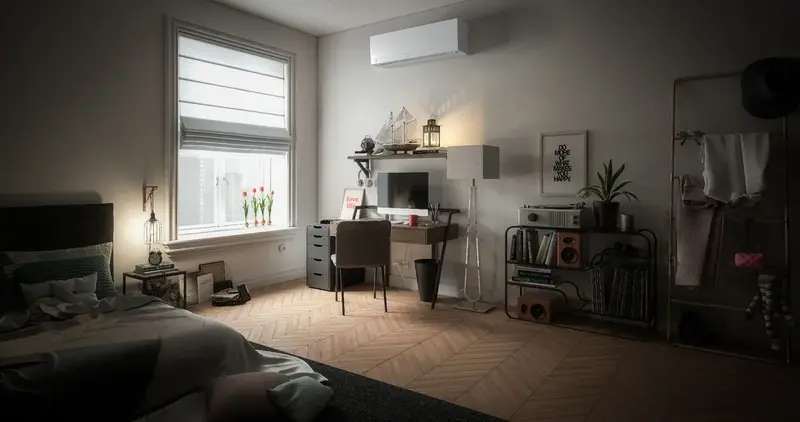
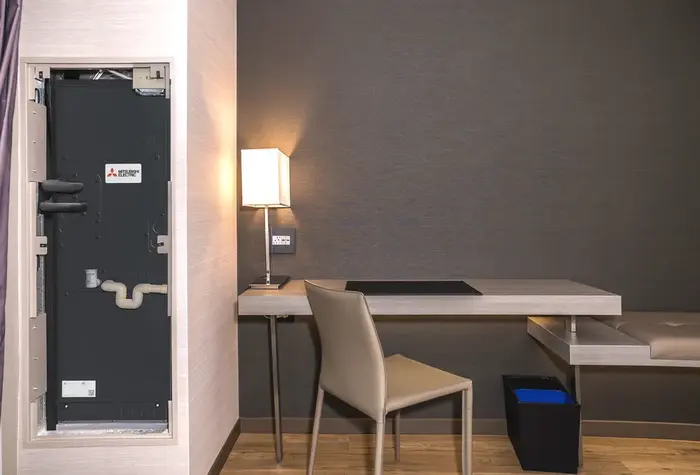
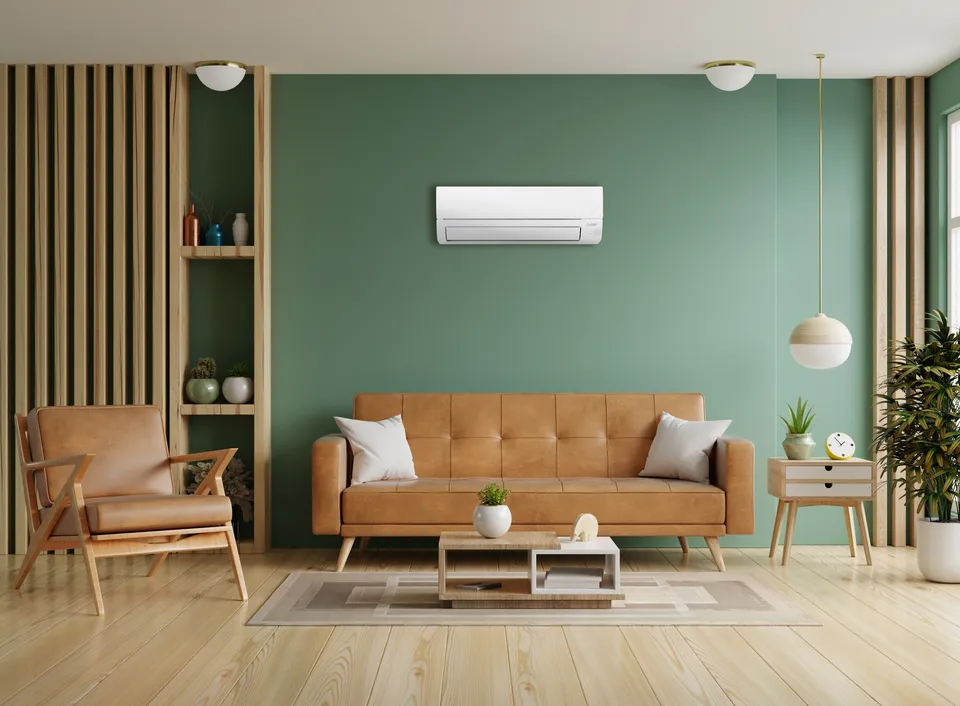
- Add a dedicated upstairs ductless zone — typically a single-zone wall-mounted unit serving the upstairs primary bedroom, or a multi-zone configuration serving multiple upstairs rooms. The downstairs central system holds main-floor setpoint; the ductless system holds upstairs setpoint independently. This is the most common and cost-effective fix.
- Add a second central system for the upstairs — typical for larger or higher-end homes. Two complete central systems, each serving its own floor.
- Convert to a zoned ducted system — single equipment with motorized dampers and per-zone thermostats. Works in some configurations but requires properly designed ductwork to be effective.
Cause 5: Original Equipment and Ductwork Sized for Original Conditions
Two-story Dallas homes built 1970–2000 often had HVAC sized for the as-built envelope. Over the decades, those homes have typically received: replaced windows, attic insulation upgrades, weatherstripping, sometimes wall insulation. Current envelope conditions are 20–30% better than original.
But the ductwork — particularly the upstairs supply trunk — was sized for the original envelope cooling load. As the envelope improved, the system could increasingly handle the downstairs (where supply runs are short and well-sized) but progressively struggled with the upstairs (where supply runs were marginal even at original sizing).
The fix: Right-sizing through Manual J load calculation, often paired with a dedicated upstairs zone (Cause 4 fix above) to handle the residual gap.
The Diagnostic Visit That Identifies Your Specific Cause
The right fix depends on which causes apply to your specific home. We start with a diagnostic visit that includes:
- Duct pressure test (45–60 minutes) — measures actual leakage rate
- Attic ductwork visual inspection — confirms insulation condition, joint integrity, register conditions
- Upstairs supply and return airflow measurement — quantifies actual delivered CFM at each register
- Thermal imaging — identifies hot zones in the building envelope, missing insulation, and duct leak locations
- Manual J load calculation — current cooling load vs. installed equipment capacity
This produces a prioritized fix recommendation — typically in three tiers:
Tier 1: Targeted improvements (under $3,500) — duct sealing, upstairs return-air addition, attic insulation top-up. Often resolves the upstairs hot problem without any equipment change.
Tier 2: Dedicated upstairs zone (typically $5,500–$12,500) — add a single-zone or two-zone ductless system serving upstairs rooms. The most reliable fix when targeted improvements aren't enough.
Tier 3: System reconfiguration ($15,000+) — second central system, ducted zoning, or whole-system replacement with right-sized equipment. Reserved for cases where Tier 1 + Tier 2 aren't viable.
Representative Dallas Diagnostic Outcomes
1985 East Dallas two-story — Tier 1 fix. 2,800 sq ft two-story with downstairs holding 72°F and upstairs running 79°F on summer afternoons. Diagnostic identified 32% duct leakage and missing dedicated upstairs return air. Fix: duct sealing + upstairs return-air addition + minor attic insulation work. Total project $2,800. Post-fix upstairs runs within 1.5°F of downstairs setpoint.
1992 Plano two-story — Tier 2 fix. 3,200 sq ft two-story with persistent upstairs heat despite recent duct work. Diagnostic confirmed duct system was actually in good condition (12% leakage); the upstairs problem was structural — single-zone HVAC unable to balance the load. Fix: single-zone Mitsubishi MXZ ductless system serving the upstairs primary bedroom. Total project $7,500. Post-fix the primary bedroom holds independent setpoint year-round.
1978 Lake Highlands two-story — combined Tier 1 + Tier 2. 2,400 sq ft two-story with severe duct issues (38% leakage) plus single-zone limitations. Fix combined targeted duct sealing with a two-zone Daikin ductless system serving the two upstairs bedrooms. Total project $14,500. Post-fix upstairs holds within 1°F of downstairs setpoint and has independent control.
What Won't Fix the Upstairs-Hot Problem
A few "fixes" we hear suggested that don't actually solve the upstairs heat issue — and sometimes make it worse:
"Just turn the thermostat down further." This makes the downstairs colder without making the upstairs cooler. The structural cause (long lossy supply runs, unbalanced zones) doesn't go away.
"Run the fan continuously." Continuous fan operation can mix air slightly but doesn't address the root causes. It can also pull warm humid air through duct leaks into the conditioned space, sometimes making the problem worse.
"Buy a bigger AC." Oversizing AC equipment makes the problem worse — bigger systems short-cycle more aggressively, fail to dehumidify, and amplify duct leakage. Right-sized equipment with adequate distribution always outperforms oversized equipment.
"Install ceiling fans upstairs." Helps perceived comfort modestly but doesn't reduce actual upstairs temperature. Useful as a supplement, not as a primary fix.
Get a Diagnostic Visit for Your Two-Story Dallas Home
Call 214-238-4349 or request a diagnostic visit and we'll schedule a complete assessment.
Truficient is based in Richardson, TX and serves all of Dallas, Richardson, Plano, Garland, Mesquite, and Irving. Mitsubishi Diamond Dealer for premium installations.
Related Resources
- Uneven Temperatures Throughout Home — Dallas TX (Zoning Fix)
- Duct Sealing & Assessment Dallas
- Heat Pump Replacement Oak Cliff Dallas
Tools to Help You Decide
See Our Dallas-wide Installations
Browse photos from real mini-split and heat pump installations in Dallas-wide homes.
Get an Instant Estimate
Answer a few questions about your home and get a ballpark cost for your project.
Scan Your Home's Efficiency
Find out where your home is losing conditioned air and what upgrades make the most sense.